What if the dragon was never meant to die?
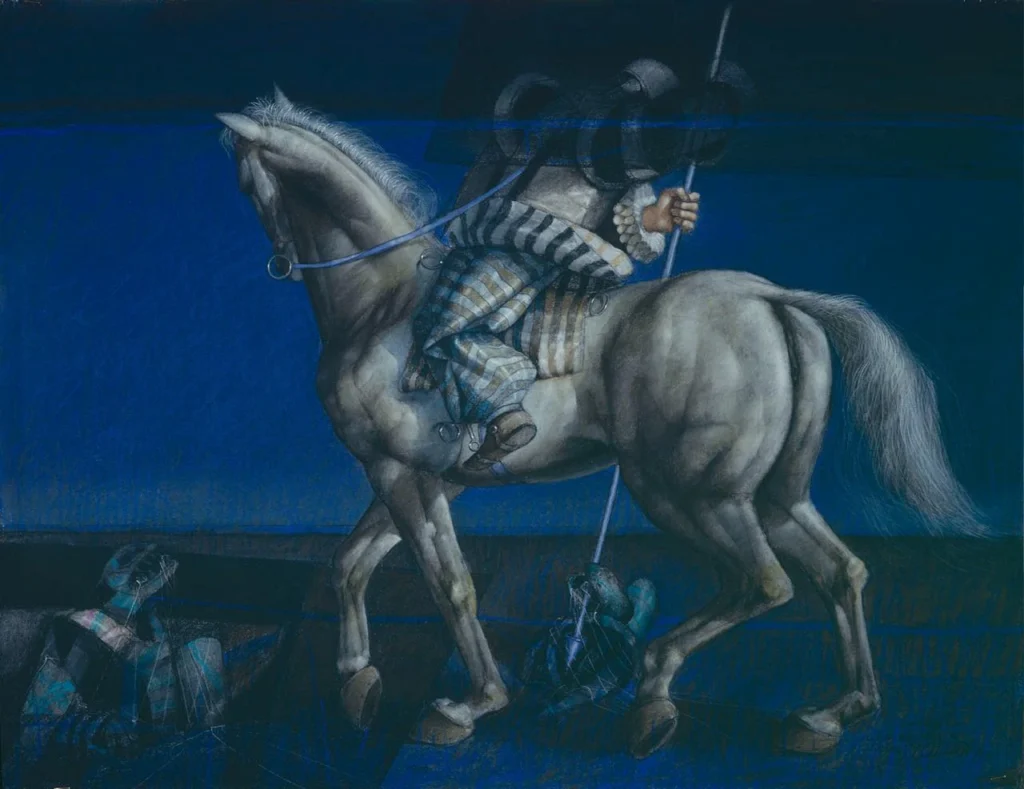
At the Duque Arango Gallery, the myth that has accompanied David Manzur’s career since the early 80s, The Legend of St. George, returns in a transformed series, where the artist continues to evolve from the work. The Roman soldier who, according to tradition, defeated a dragon and saved a city is no longer a victorious hero, but a man stopped in time, armed not to conquer, but to resist.
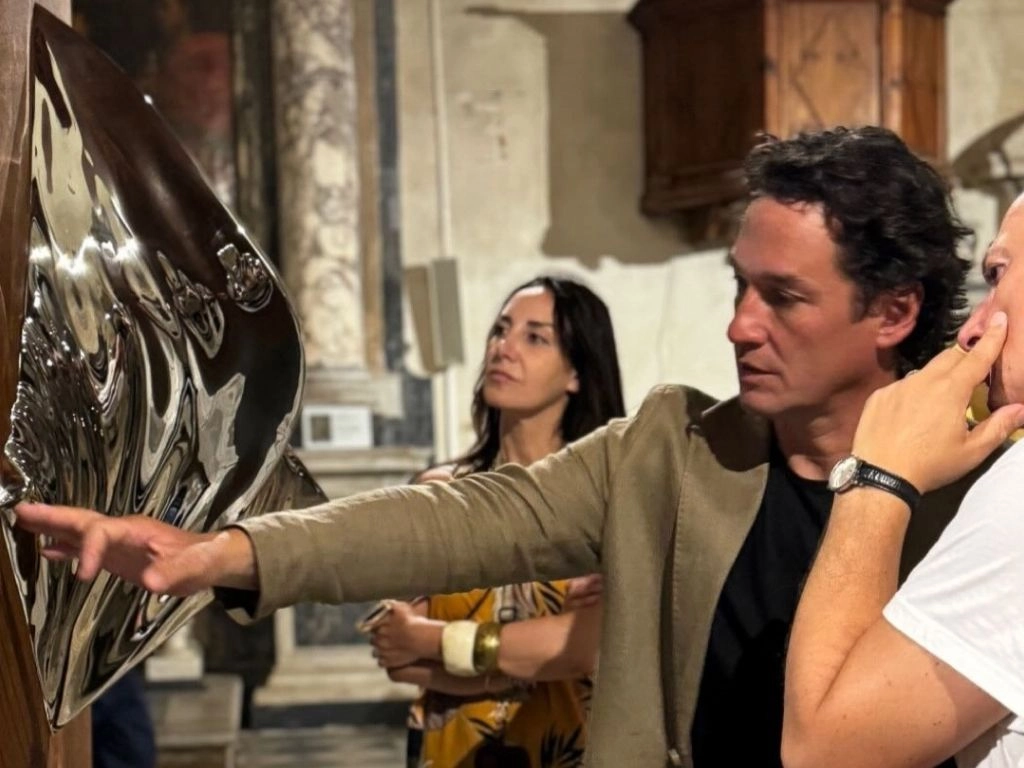
On September 4, the opening of the series and the presence of the master David Manzur turned the inauguration into a unique moment to hear, in his own voice, the meaning of one of his most emblematic works.
In this reinterpretation, the pieces worked in pastel on paper draw a dragon that ceases to be a fantastic creature and becomes a metaphor of fear, chaos and violence. The confrontation is no longer experienced as an epic gesture, but as a silent struggle.
Manzur’s visual language oscillates between the icon and the theatrical scene. His compositions, which evoke baroque drama and Byzantine solemnity, are imbued with a silence that concentrates the gaze.
At 95 years of age, the artist retains the discipline that led him to train at the Art Students League and the Pratt Institute in New York. With a long career, he has represented Colombia in biennials such as São Paulo and Venice, and his work is part of collections in the Americas, Europe and Asia.
The relationship between David Manzur and the Duque Arango Gallery has been woven over the years, in a constant dialogue that connects the master’s legacy with new generations of viewers.
The Legend of St. George offers no definitive answers: rather, it invites us to pause before the question. For those in Medellin, it is an opportunity to discover how a medieval myth can, in Manzur’s hands, reveal that even heroes are, in the end, profoundly human. The exhibition will be open to the public until October 3.
And while this series inhabits the walls of the Duque Arango Gallery, the city prepares for another gesture by the master: the arrival of a monumental sculpture of a horse, which will be donated to the University of Antioquia, to the Open Air Museum. A piece that, like his work, promises to dialogue with time and with those who look at it.