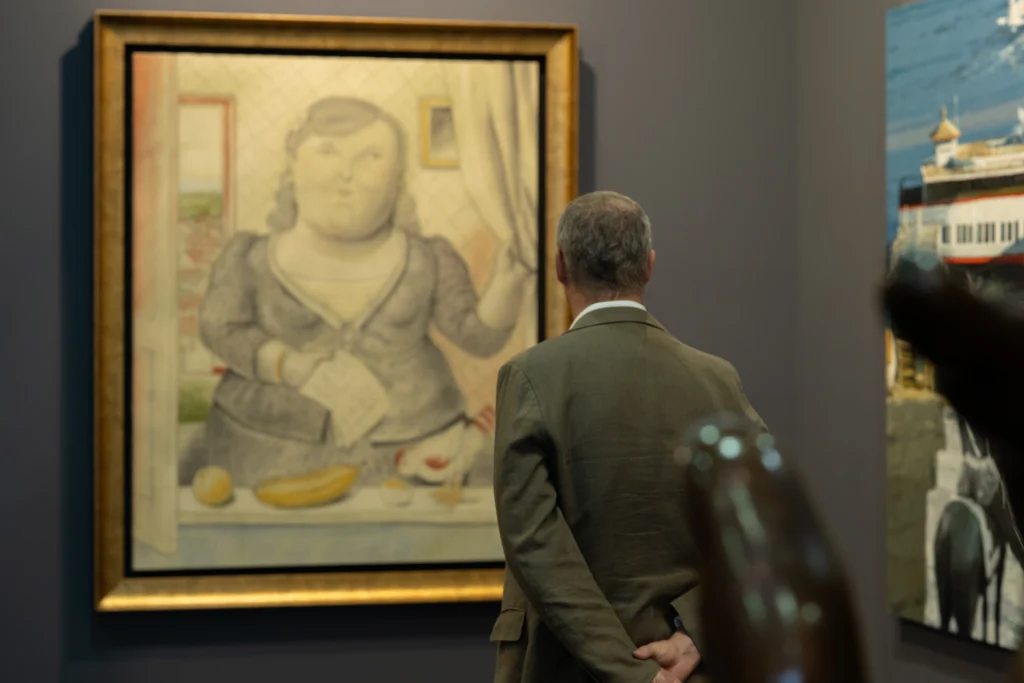
Fernando Botero´s unmistakable volumetric language, has transcended stylistic categorization to become a cultural signature. For collectors, however, the relevance of Botero lies not only in visual identity, but in the structural forces that sustain his market: museum presence, consistent demand across decades, disciplined edition practices, and an unusually transparent auction record for a Latin American master. Above all, his work appeals to collectors driven by a refined aesthetic sensibility, a deep appreciation for history, and the desire to acquire singular works that embody cultural memory, artistic mastery, and enduring visual identity.
To understand Fernando Botero today requires a connoisseurial perspective that integrates art history, market behavior, and institutional context. The following analysis addresses the most searched collector questions while expanding into deeper insights about valuation, scarcity, and long-term collecting strategy.
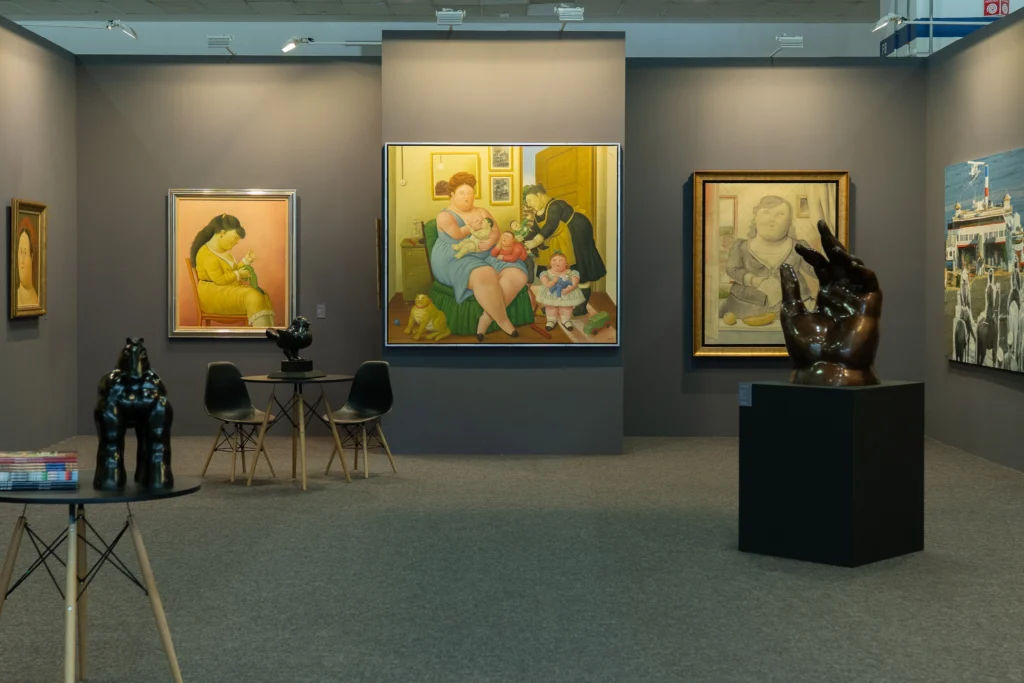
Has Botero ‘s Art Increased in Value?
Yes, over the long term, Botero’s market has demonstrated sustained growth, but not speculative volatility.
Among postwar Latin American artists, Botero occupies a rare position: his market has matured gradually over more than five decades, supported by museum acquisitions, global exhibitions, and a steady collector base rather than sudden market hype. This structural stability distinguishes him from many contemporary artists whose prices fluctuate sharply.
Historically, the strongest appreciation has been concentrated in works produced between the late 1960s and the mid-1980s, years in which Botero consolidated the visual language that would define his career. Paintings from this period combine conceptual clarity, formal innovation, and historical significance, making them particularly attractive to institutional buyers and seasoned collectors.
However, an essential principle applies to all blue-chip artists:
No artwork carries a guaranteed trajectory of appreciation.
Even in Botero’s case, who is arguably one of the most stable markets in Latin American art, value is shaped by a constellation of factors:
- Provenance and exhibition history
- Period and subject matter
- Scale and medium
- Condition and authenticity documentation
- Market timing and macroeconomic context
What Is the Record Price for a Botero Painting?
Botero’s auction record confirms his position within the upper tier of the global modern art market.
His highest-performing paintings have consistently achieved multi-million-dollar results at major international auction houses such as: Christie’s, Sotheby’s and Phillip’s.
A defining milestone occurred in 2023, when the painting The Musicians (1979) sold for approximately $5.1 million, establishing a new benchmark for Botero’s painterly output.
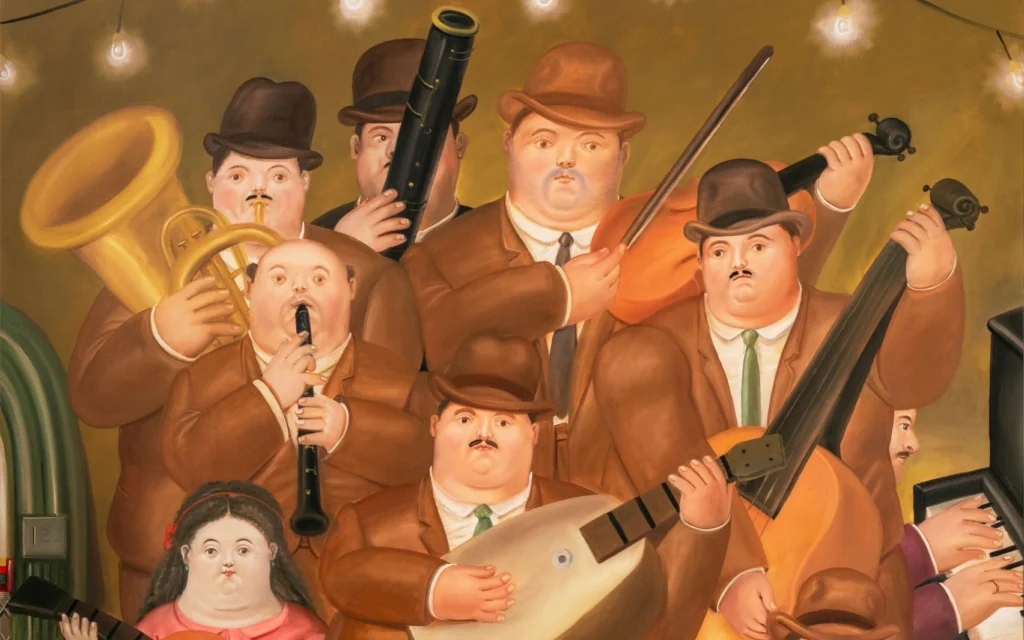
See full list of Botero’s top 10 best-selling artworks.
Yet record prices alone do not define market strength. What matters is price consistency across tiers.
Are Botero Sculptures Limited Editions?
Yes, but their edition structure reflects a carefully balanced philosophy between exclusivity and global visibility.
Botero produced numerous bronze sculptures throughout his career, most of which exist in limited editions. Unlike mass-produced contemporary sculpture, his works typically follow a disciplined casting model.
The most common configuration includes:
- Editions of 3 to 6 casts
- Additional artist’s proofs
- Foundry documentation and numbering
However, collectors should understand that Botero’s sculptural practice operates within three distinct categories.
- Small-Scale Bronzes: These works are designed for private collections and typically adhere to strict edition limits. Their manageable scale makes them among the most actively traded objects in Botero’s secondary market.
- Medium-Scale Sculptures: Often acquired by institutions, corporations, and major collectors, these sculptures maintain limited editions but circulate more widely in the international market.
- Monumental Public Sculptures: Installed in cities across Europe, the Americas, and Asia, these works function as cultural landmarks rather than purely collectible objects. While technically editioned, their replication across public sites shifts the emphasis from scarcity to visibility.
For collectors, the most critical variables are:
- Edition number
- Foundry provenance
- Casting date
- Condition and patina
These details frequently determine value more than size alone.
What Is the Difference Between Early and Late Botero Works?
Understanding Botero’s stylistic evolution is fundamental to both art historical interpretation and market valuation. His career can be broadly divided into three phases, each with distinct aesthetic and economic implications.
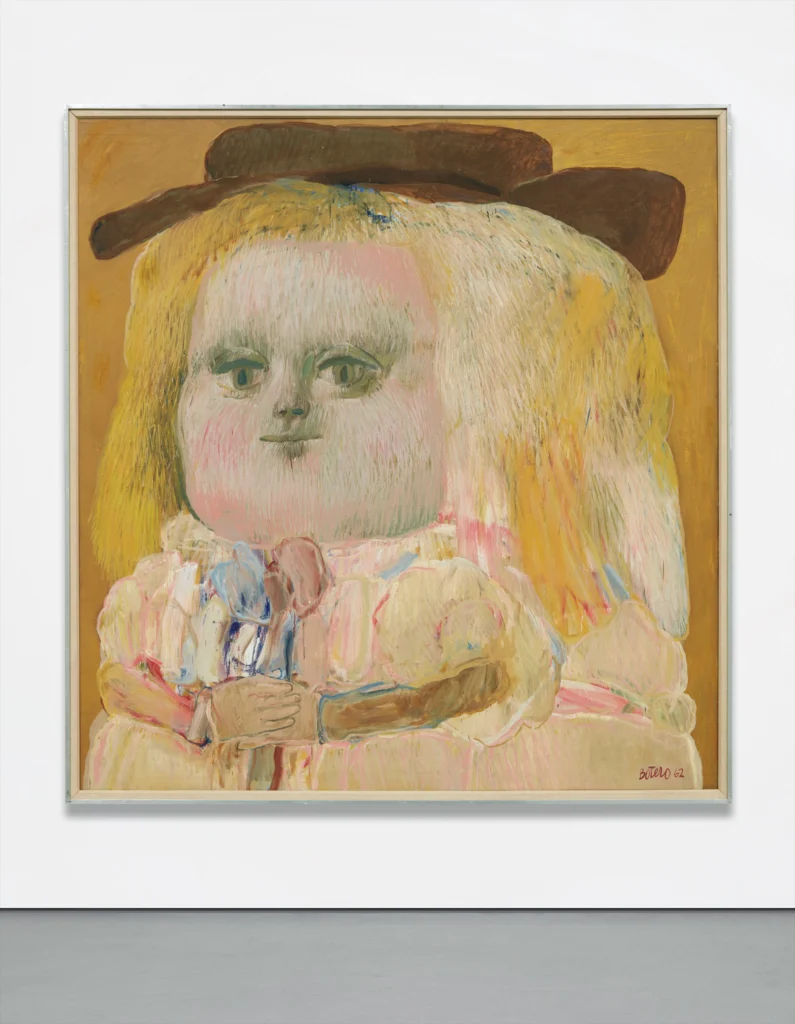
Early Period (1950s–1960s): The Formation of a Language
In this phase, Botero experimented with proportion, perspective, and spatial compression. Figures were not yet fully volumetric; instead, they revealed the intellectual process that would eventually define his signature style.
These works are particularly important for collectors because they document the emergence of Boterismo.
Characteristics include:
- Muted color palettes
- Religious and historical subjects
- Formal experimentation
- Strong influence from European modernism
Early works are often rarer in the market and carry significant historical value.
Mature Period (1970s–1990s): The Definition of Boterismo
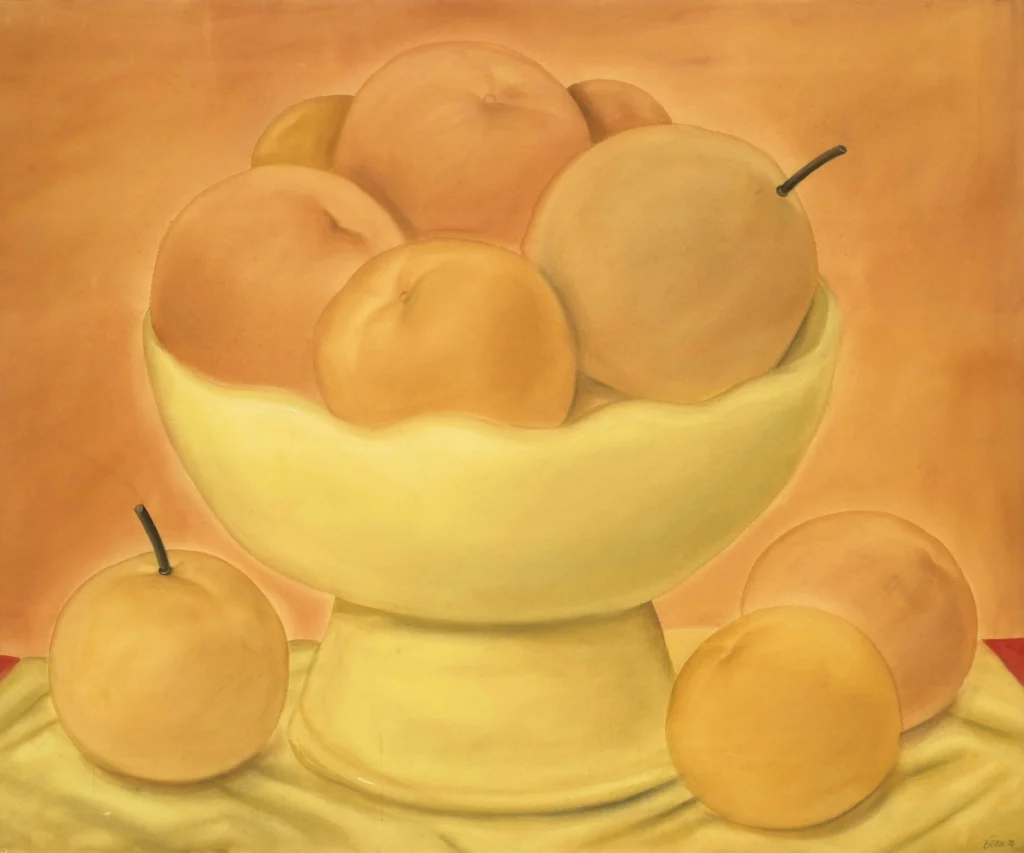
This period represents the apex of Botero’s artistic production and remains the most sought-after segment in the market.
Here, the artist fully stabilized his visual language:
- Monumental figures
- Saturated color fields
- Balanced compositions
- Narrative scenes of Latin American life
Themes expanded to include:
- Domestic interiors
- Still lifes
- Social satire
- Cultural rituals
From a collecting perspective, this period combines recognizability, scale, and historical importance, three factors that consistently drive demand.
Late Period (2000s–2023): Refinement and Legacy
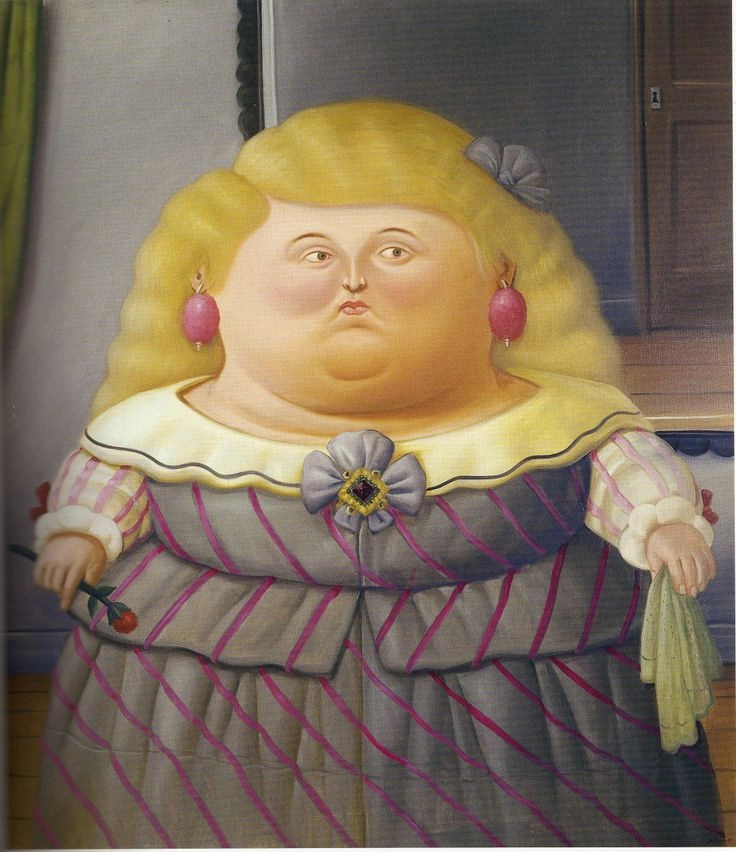
In his later years, Botero revisited earlier themes with greater technical precision and compositional clarity. Brushwork became more controlled, and forms more distilled.
While some critics debate the conceptual intensity of late works, collectors value them for different reasons:
- Strong brand recognition
- Museum visibility
- Market familiarity
- Accessibility for new collectors
These works often perform steadily in the market, reflecting confidence in the artist’s legacy rather than speculative enthusiasm.
Where Are Botero’s Works Held in Major Museums?
Institutional presence is one of the strongest indicators of long-term cultural and financial stability in the art market. Botero’s work is held in some of the world’s most respected museums, reinforcing his status as a global modern master.
Notable collections include:
- Museum of Modern Art, New York (MoMA)
- Metropolitan Museum of Art, New York (MET)
- Art Institute of Chicago
- Museo Botero
- Museo de Antioquia
- Centre Pompidou
In Botero’s case, public sculpture installations further amplify his visibility. Cities such as Paris, Madrid, New York, Singapore, Seoul, Medellín and more, display monumental bronzes in prominent urban spaces, transforming his work into part of the architectural and cultural landscape.
Why Does Institutional Validation Matter So Much?
Museum collections serve as long-term anchors for an artist’s reputation. When institutions acquire works, they effectively signal scholarly recognition and cultural significance. In Botero’s case, decades of museum exhibitions have created a foundation of trust that stabilizes his market.
The Structural Strength of Botero’s Market
Botero’s position in the art market is not accidental. It is the result of a rare convergence of factors:
- Stylistic singularity: Few artists possess a visual language as instantly recognizable.
- Medium diversification: Painting, sculpture, drawing, and tapestry broaden collector access.
- Institutional integration: Global museum collections reinforce historical importance.
- Geographic reach: Collectors across Europe, the Americas, and Asia participate in his market.
Together, these forces create what market analysts often describe as structural resilience, a condition in which demand persists even during economic uncertainty.
Editorial Perspective: Botero as a Long-Term Cultural Asset
The relevance of Fernando Botero extends beyond price performance. His work represents a unique intersection of artistic identity, cultural history, and market durability. He is not simply a recognizable artist, he is a market category.
Collectors evaluating Botero today should focus on three guiding principles:
- Quality over quantity: Museum-level works consistently outperform secondary examples.
- Documentation over speculation: Provenance, exhibition history, and condition remain decisive.
- Patience over prediction: The strongest returns in art collecting emerge over decades, not seasons.
Within the global landscape of modern and contemporary art, Fernando Botero remains one of the most structurally stable figures, an artist whose market reflects the same monumentality, consistency, and permanence that define his work itself.