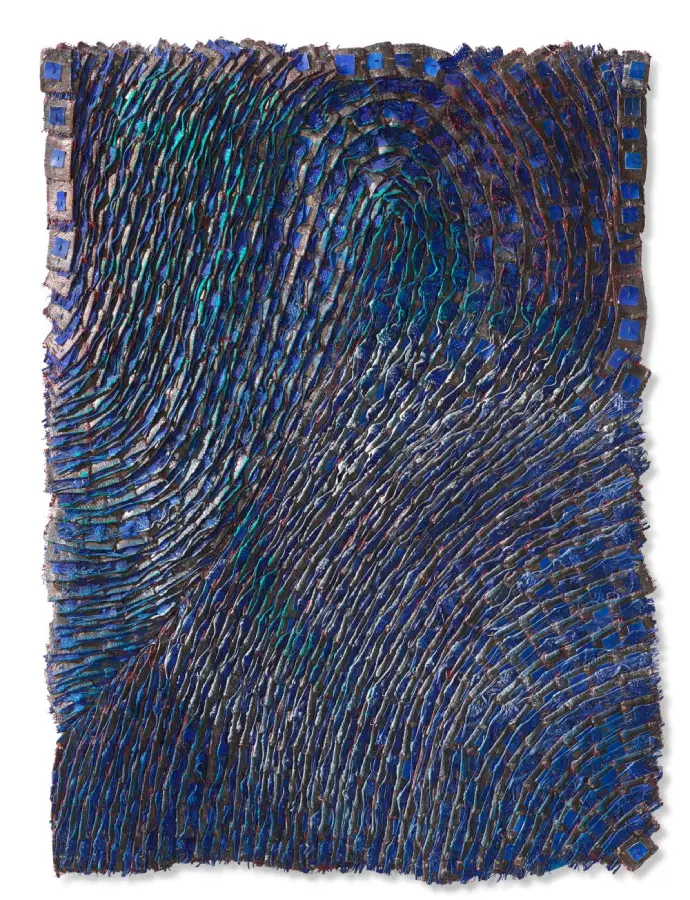
Textile art is a creative discipline in which artists use fibers (natural or synthetic) and textiles (e.g. yarn, thread, fabric) as the primary medium to produce artworks. These works can range from woven tapestries and embroidered pieces to mixed-media wall hangings, soft sculptures, large-scale installations, or even wearable art.
Historically, textiles were often associated with domestic crafts and utilitarian purposes: clothing, blankets, decorative tapestries. But during the 20th century, especially after World War II, a transition began: artists started exploring fibers not for their utility but as a valid expressive medium for fine art.
Today, textile art (or fiber art) occupies a dynamic, respected space within contemporary art. It challenges traditional boundaries between craft, art, design, and even architecture — offering a rich, tactile, and deeply symbolic form of expression.
Why textile art matters: the revival and cultural resonance
In recent years there has been a resurgence of interest in textile art and fiber-based works. Many contemporary artists, designers, and collectors are drawn to textiles because they offer texture, warmth, and an aesthetic grounded in human touch and tradition, qualities often missing in mass-produced, digital, or industrial design.
Moreover, textile art connects deeply with history and cultural identity. In many regions, including Latin America, textile practices are rooted in ancestral and indigenous weaving traditions. Contemporary textile artists often draw on those roots, reinterpreting techniques, motifs, and symbolic languages in a modern context.
Because textile art intersects with craft, tradition, identity, memory, politics, and modern aesthetics, it has become a powerful vehicle for storytelling and cultural dialogue.
Materials & techniques: What defines contemporary textile fiber art?
Artists working within textile or fiber art use a wide array of materials and techniques. Common materials include: wool, cotton, linen, silk, hemp or other natural fibers; but also synthetic fibers, recycled textiles, mixed media, and sometimes unconventional elements. z
In terms of technique, textile art is incredibly diverse. Examples include: weaving (on looms or hand-weaving), embroidery, quilting, knitting, crocheting, braiding, knotting, printing, dyeing, mixed-media collage, and more experimental practices.
Contemporary artists may also combine traditional fiber techniques with modern materials or concepts: layering textiles, playing with scale, working three-dimensionally (sculpture / installation), integrating found or recycled materials, or exploring conceptual narratives through textures and forms.
Textile Art vs. Fiber Art — Are they the same?
You’ll often see the terms “textile art” and “fiber art” sometimes interchangeably. But there is a subtle difference:
- Textile art often carries the connotation of using fabric/textiles in artworks weaving, tapestry, embroidery, etc.
- Fiber art tends to emphasize fibers (yarn, thread, fibers) and often leans toward fine art: conceptual, sculptural, non-functional, sometimes departing entirely from traditional fabric or textile conventions.
In contemporary discourse, fiber art has become a broader umbrella under which textile art (especially non-functional, conceptual or sculptural textile works) comfortably resides.
How to start exploring or practicing Textile / Fiber Art
- Start with simple materials (yarn, fabric scraps, embroidery thread, small loom, needles).
- Try basic techniques: weaving, knitting, crocheting, stitching, patchwork, embroidery, which can become expressive or conceptual depending on your intent.
- Explore mixed-media approaches: combine textiles with found objects, natural materials, or sculptural supports. Many contemporary fiber artists work beyond the flat wall-hanging paradigm.
- Study the cultural, historical, and symbolic aspects of textile practices — especially if interested in heritage, identity, or conceptual art grounded in memory or tradition.
Textile/fiber art offers a flexible, deeply personal path: it can be purely aesthetic, deeply conceptual, rooted in heritage or a hybrid of all these.
Spotlight: Latin American & Contemporary Textile Artists: The case for cultural depth
Latin America has become a fertile ground for textile art, where ancestral weaving traditions, indigenous fiber practices, and contemporary art discourse converge. Many artists from the region reclaim textile techniques as a means of cultural memory, identity, and resistance, bridging tradition and modernity.
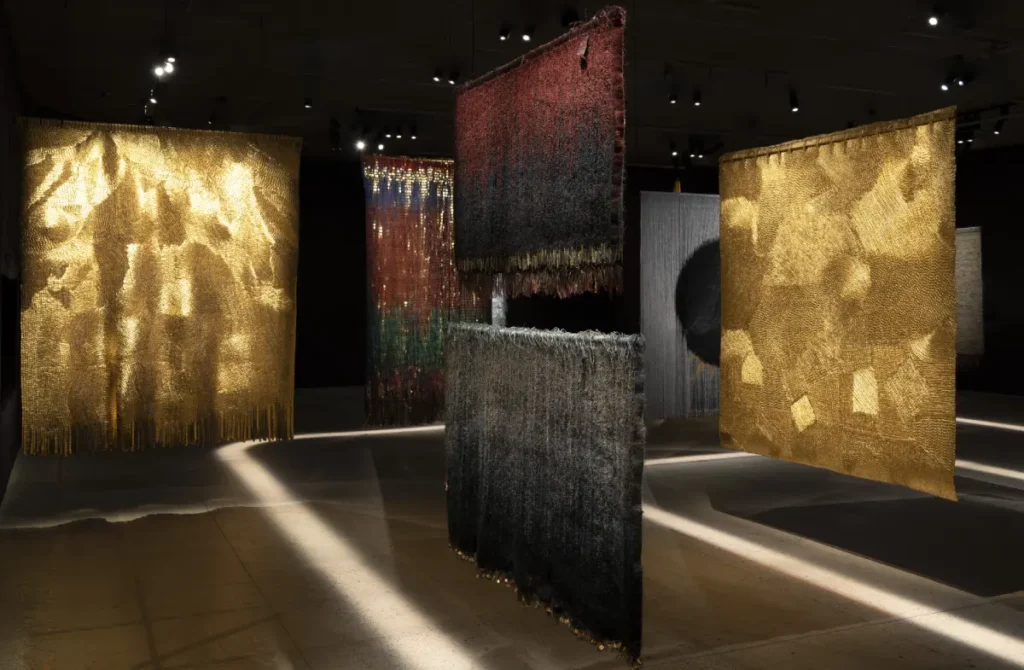
One of the most influential figures in this context is Olga de Amaral. Since the 1960s, she has redefined textile art in Latin America: transforming weaving into sculptural, symbolic, spatial works that transcend functional craft to become fine art.
Her pieces, rich in texture, layered fibers, subtle color palettes, and references to pre-Columbian heritage, architecture, and nature, invite viewers to experience textile not as decoration but as a powerful visual language rooted in place and memory.
Beyond Olga de Amaral, there is a growing number of Latin American fibre-textile artists who, through embroidery, weaving, tapestry, mixed media, and installation, explore themes of identity, memory, gender, cultural heritage, and contemporary life.
What makes textile art different from decorative or functional textiles?
The shift lies in intent. While functional textiles aim at utility (clothing, upholstery, blankets), textile/fiber art pursues aesthetic, conceptual, symbolic — sometimes sculptural — objectives. The work is meant for contemplation, artistic dialogue, often displayed in galleries or as wall hangings or installations rather than used.
Is fiber art considered “fine art” today, or is it still craft?
Fiber art has firmly joined the realm of fine art. Since the mid-20th century, artists have used fiber to create artworks exhibited in galleries, museums, and biennials — breaking down the traditional hierarchy that placed textile as “craft”.
What materials and techniques are common in contemporary textile art?
Natural fibers (wool, cotton, linen, hemp, silk), synthetic fibers, recycled textiles, mixed materials. Techniques can include weaving, embroidery, knitting, crochet, quilting, printing, dyeing — as well as experimental, sculptural, or installation-based approaches.
Why is textile / fiber art gaining popularity again now?
There’s renewed appreciation for handmade, tactile, material-based art — especially against a backdrop of digital overload and mass manufacturing. Textile art brings human touch, texture, authenticity. It also offers aesthetic warmth and a connection to tradition, heritage, identity.
How can I, as a beginner, start exploring textile/fiber art?
Begin small — with yarn, fabric scraps, embroidery or simple weaving. Let the process be intuitive. Try mixing media or exploring textures. Don’t worry about perfection — focus on expression. Study historical and cultural textile traditions for inspiration, especially if you’re interested in combining craft + meaning.