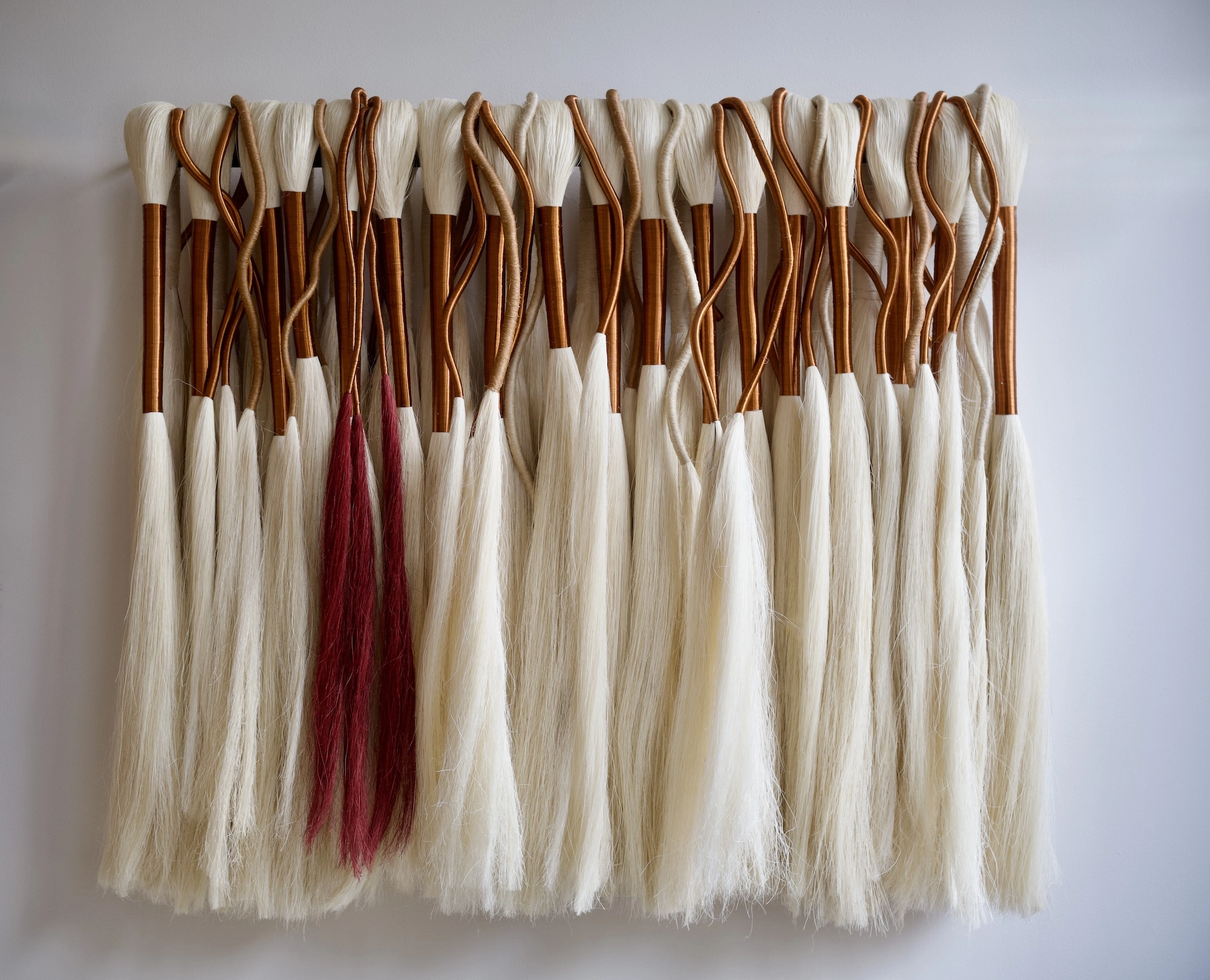
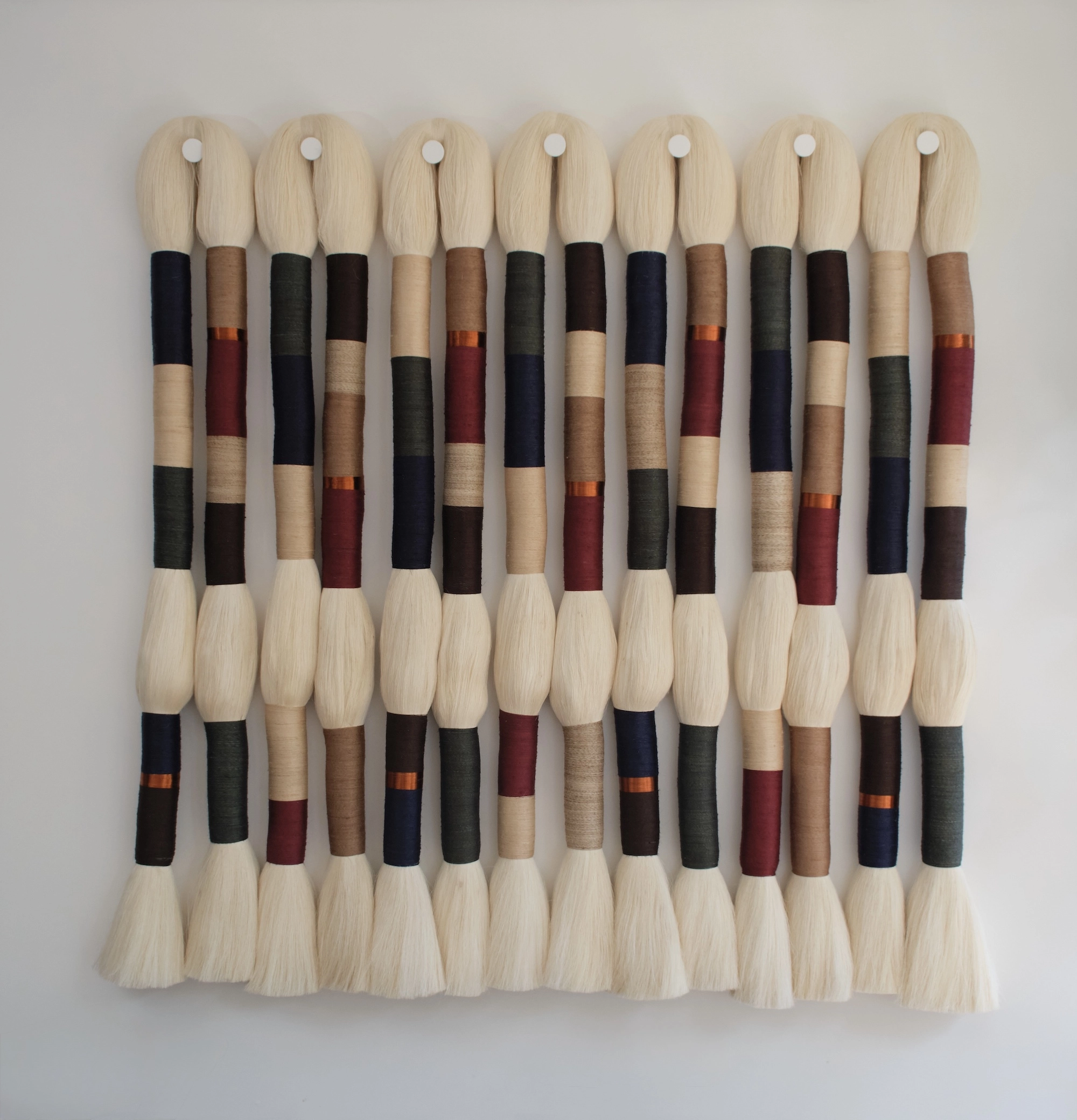
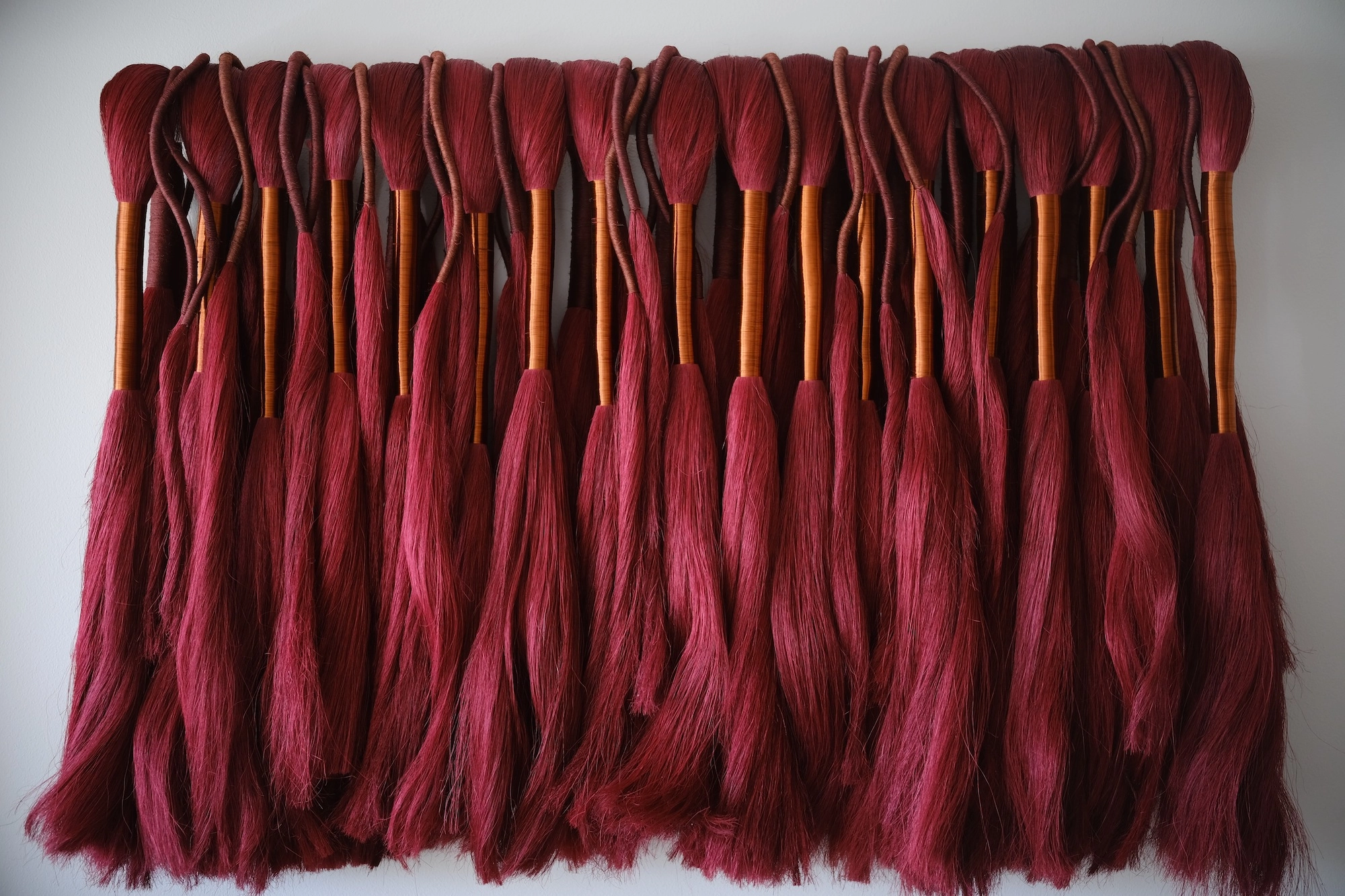
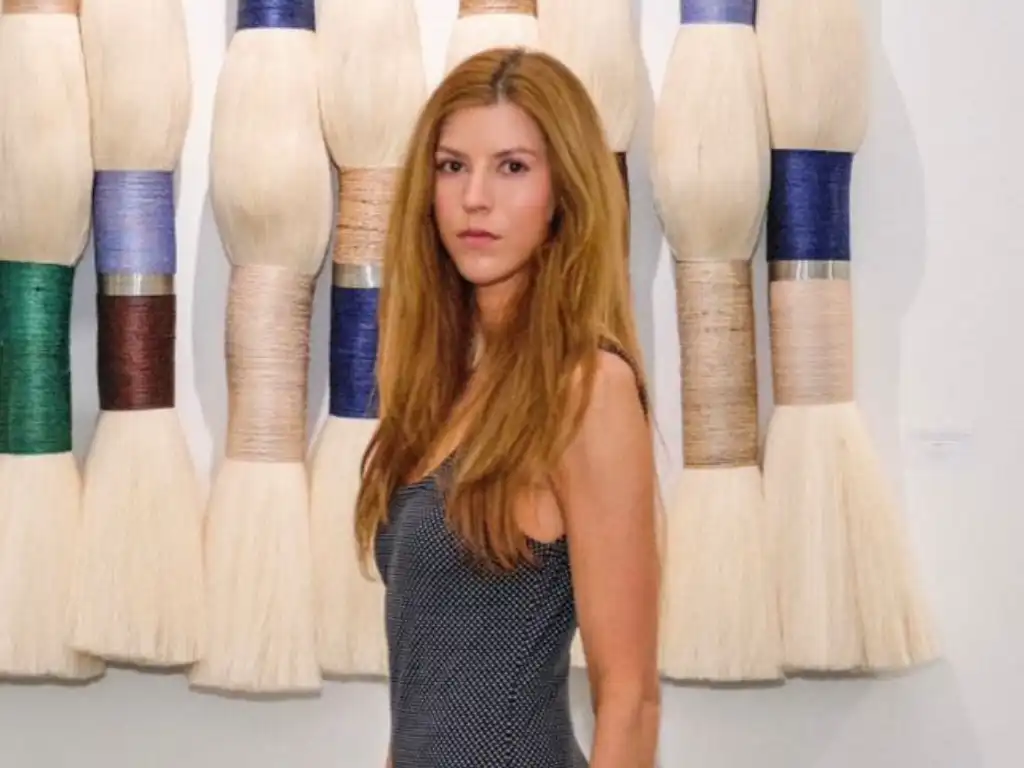
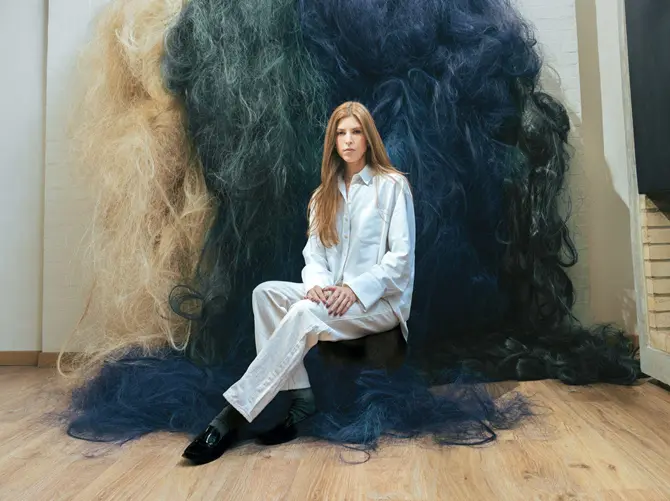
Alejandra Aristizábal (Manizales, Colombia, 1987) is a contemporary Colombian artist whose work explores the relationships between material, territory, nature, and identity through textile art. Fique, a natural fiber closely associated with Colombia’s Andean regions, occupies a central place in her practice, becoming both a sculptural material and a means of reflecting on landscape and traditional knowledge.
Born in Colombia’s Coffee Region, Aristizábal grew up surrounded by the Andean landscape and the region’s artisanal traditions. She later studied Visual Arts at Miami International University of Art & Design, where she explored painting, photography, and sculpture. In 2015, she presented her first textile pieces at the Young Art Museum in Fort Lauderdale, beginning an ongoing investigation into the structural and symbolic possibilities of fiber.
In Alejandra Aristizábal’s artworks, fique moves beyond its traditional artisanal function to acquire a sculptural and architectural dimension. The artist weaves, stretches, and transforms the fibers, combining them in some works with elements such as copper and silver threads. The resulting compositions exist at the intersection of textile art, sculpture, and contemporary abstraction.
Her practice also maintains a close connection with rural and artisan communities involved in the cultivation, extraction, and transformation of fique. This collaboration incorporates knowledge passed down through generations and establishes a dialogue between traditional practices and the language of contemporary art.
Through her use of natural fibers and processes connected to the land, Aristizábal also addresses concepts such as sustainability, material memory, and humanity’s relationship with nature. Her work is part of a generation of artists expanding the possibilities of Latin American textile art into new spatial and sculptural dimensions.
Alejandra Aristizábal’s work has been presented internationally at art fairs including Palm Beach Modern + Contemporary, Zona Maco, ART SG, and Art Miami. She is currently represented by Duque Arango Gallery.