Looking into Latin American contemporary art today requires understanding a complex cultural and historical framework that intertwines artistic innovation, political memory, material experimentation, and the dynamics of the global art market. Over the past decades, artists from Latin America have gained remarkable visibility in museum exhibitions, international biennials, and major private art collections, drawing increasing attention from international art collectors and institutions seeking to expand the narrative of global contemporary art.
Within this evolving context, Duque Arango Galería has developed a curatorial program that connects historical awareness with contemporary artistic production. Through gallery representation, strategic collaborations, and participation in international fairs, the gallery presents a carefully selected group of contemporary Latin American artists whose practices contribute meaningfully to the development of modern Latin American art.
This curatorial overview highlights artists represented or closely allied with the gallery, figures whose work resonates with collectors interested in contemporary art investment, scholars researching modern Latin American painters, and audiences discovering some of the top Latin American contemporary artists shaping the region today.
Ariel Cabrera:
Among the most compelling contemporary Latin American painters, Cuban artist Ariel Cabrera (Camagüey, 1982) has developed a pictorial language that merges academic mastery with conceptual inquiry.
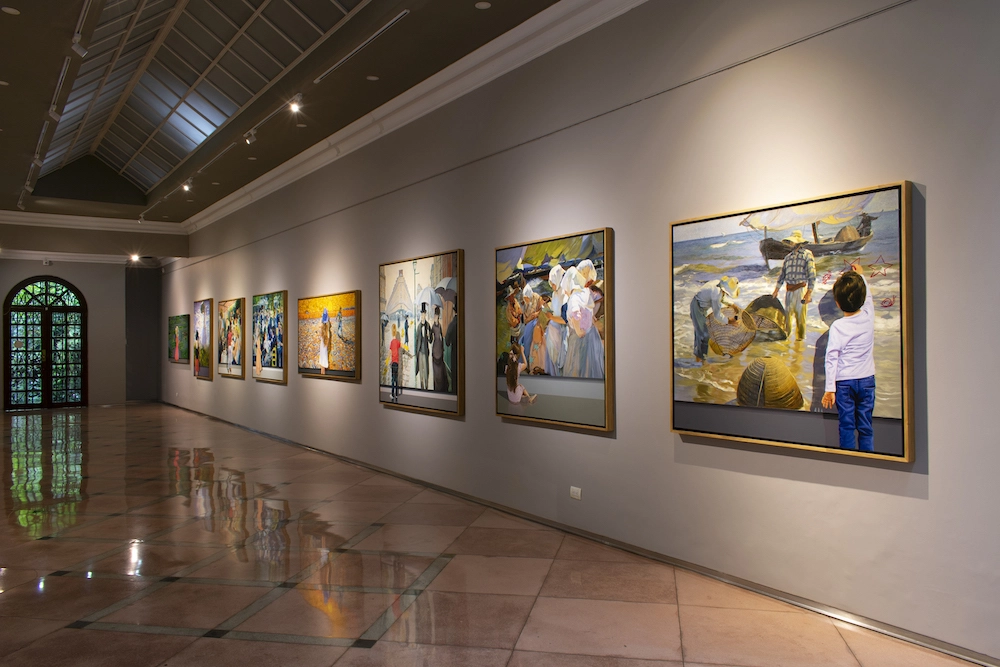
Cabrera’s work operates within the field of contemporary figurative painting, constructing layered compositions that reinterpret historical episodes, political figures, and cultural symbols. His paintings frequently juxtapose multiple temporalities, creating complex visual narratives where past and present intersect.
Recent series such as Metanarratives exemplify this approach. In these works, Cabrera integrates references to art history, political iconography, and popular culture, questioning the mechanisms through which historical memory is constructed. His paintings function simultaneously as historical commentary and visual storytelling.
The artist has exhibited internationally across the United States, Europe, and Latin America, and his works have entered important private art collections and institutional holdings, including the Pérez Art Museum Miami and the Collezione Maramotti in Italy. Cabrera’s practice illustrates how contemporary Latin American artists are reinterpreting history through the language of painting while gaining increasing attention in the Latin American art market.
Exhibition “Metanarratives” by contemporary artist Ariel Cabrera at Duque Arango Gallery, 2025
Julio Larraz:
The work of Julio Larraz (Cuba, 1944) represents an essential chapter within modern Latin American art. Larraz initially gained recognition as a political caricaturist in the United States after leaving Cuba in the early 1960s, but he later developed a distinguished career as a painter, becoming widely admired for his poetic visual narratives.
Today, Julio Larraz paintings are recognized for their technical precision and their enigmatic atmosphere. His compositions often depict maritime scenes, imagined architectures, and solitary figures suspended within vast landscapes. Through oil painting, Larraz builds symbolic worlds that reflect on themes such as exile, power, and solitude.
Technically, his practice demonstrates a profound knowledge of classical painting traditions. Yet his imagery remains unmistakably contemporary, situating him among the most respected contemporary Latin American painters working today.
Larraz’s works have been widely exhibited across the United States, Europe, and Latin America, and they appear frequently in contemporary art collectors’ portfolios interested in historically grounded yet conceptually rich painting.
Commemorative exhibition of Julio Larraz’s career in Mexico, 2024
Gustavo Vélez:
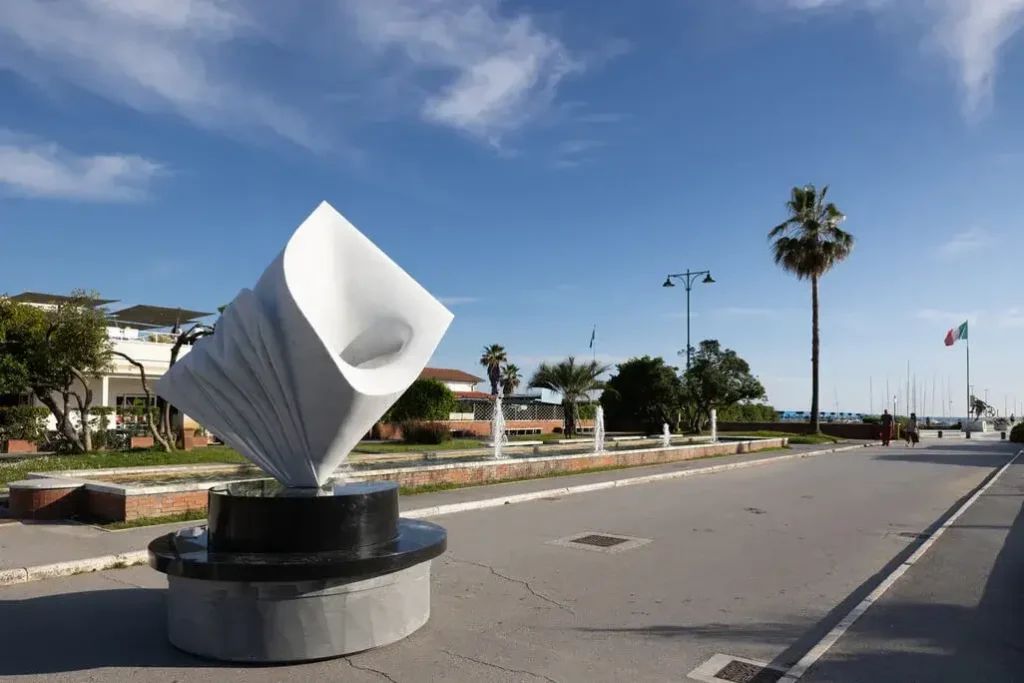
The language of Gustavo Vélez sculpture often relies on materials such as bronze, marble, and steel. Through carefully calculated structures, the artist creates forms that appear to defy gravity, generating a sense of suspended balance.
Colombian sculptor Gustavo Vélez has built an international reputation through a body of work that explores structural tension, equilibrium, and monumental presence. His practice is closely associated with contemporary sculpture that transforms geometric volumes into dynamic spatial experiences.
Many of Vélez’s sculptures occupy public spaces and cultural institutions across Europe, Asia, and the Americas, demonstrating the global reach of Latin American artists to watch in the sculptural field. His work exemplifies how contemporary sculpture from the region has moved beyond regional narratives to participate fully in international conversations about form, materiality, and spatial perception.
Javier Caraballo:
Colombian painter Javier Caraballo has developed one of the most distinctive voices within contemporary Colombian artists working today. Born in Barranquilla, Caraballo’s work investigates the expressive potential of childhood drawing as a legitimate artistic language.
At first glance, his compositions appear spontaneous and playful, echoing the gestural freedom of children’s drawings. Yet beneath this apparent simplicity lies a sophisticated engagement with art history. This paradox between innocence and historical awareness, positions Caraballo within an expanding group of rising contemporary artists whose work challenges traditional hierarchies of artistic skill and aesthetic value.
His paintings have been presented at international art fairs including Art Miami, Art Palm Beach, and events held during Art Basel Week in Zurich, strengthening his visibility among contemporary art collectors seeking distinctive voices within the Latin American contemporary art landscape.
Javier Caraballo exhibition in Colombia. Duque Arango Gallery, 2023
Oscar Murillo:
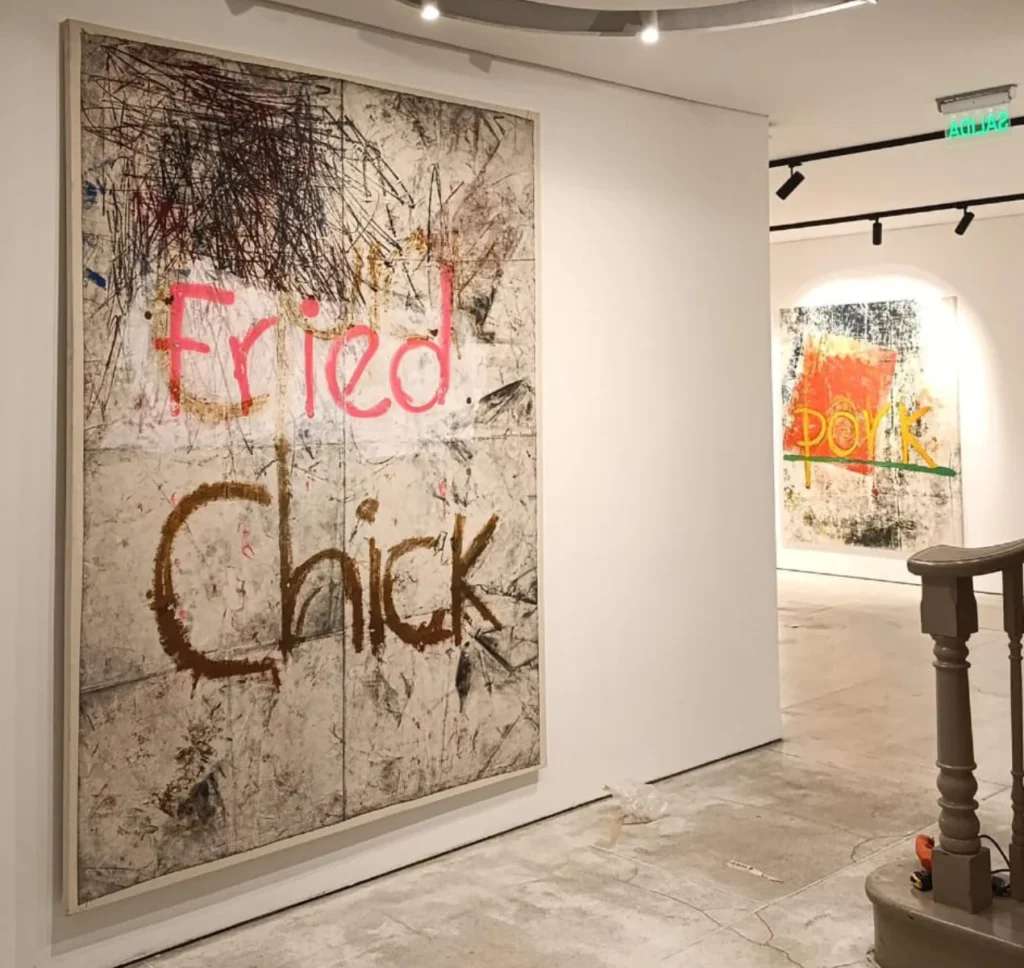
Few contemporary Colombian artists have achieved the international recognition of Oscar Murillo. Born in Colombia in 1986 and raised in the United Kingdom, Murillo has developed a multidisciplinary practice spanning painting, installation, performance, and collaborative social projects.
The Oscar Murillo artist practice is often associated with themes of migration, labor, identity, and globalization. His works frequently combine raw materials as canvas, industrial textiles, paint residues, with gestural marks that evoke collective experiences rather than individual expression.
Murillo’s participation in major international exhibitions, including the Venice Biennale, and his nomination for the Turner Prize have positioned him among the most visible figures in contemporary Latin American artists on the global stage.
Reynier Ferrer:
Cuban painter Reynier Ferrer, trained at the historic San Alejandro Academy of Fine Arts in Havana, has developed a painting practice defined by expressive energy and chromatic intensity.
Reynier Ferrer artist’s language merges abstraction and figuration, creating compositions where movement and color evoke emotional states rather than literal representation. His work demonstrates how emerging Latin American artists are rethinking painting through physical gesture and improvisation.
Exhibition at Duque Arango Gallery by Cuban artist Reynier Ferrer.
Alejandra Aristizábal:
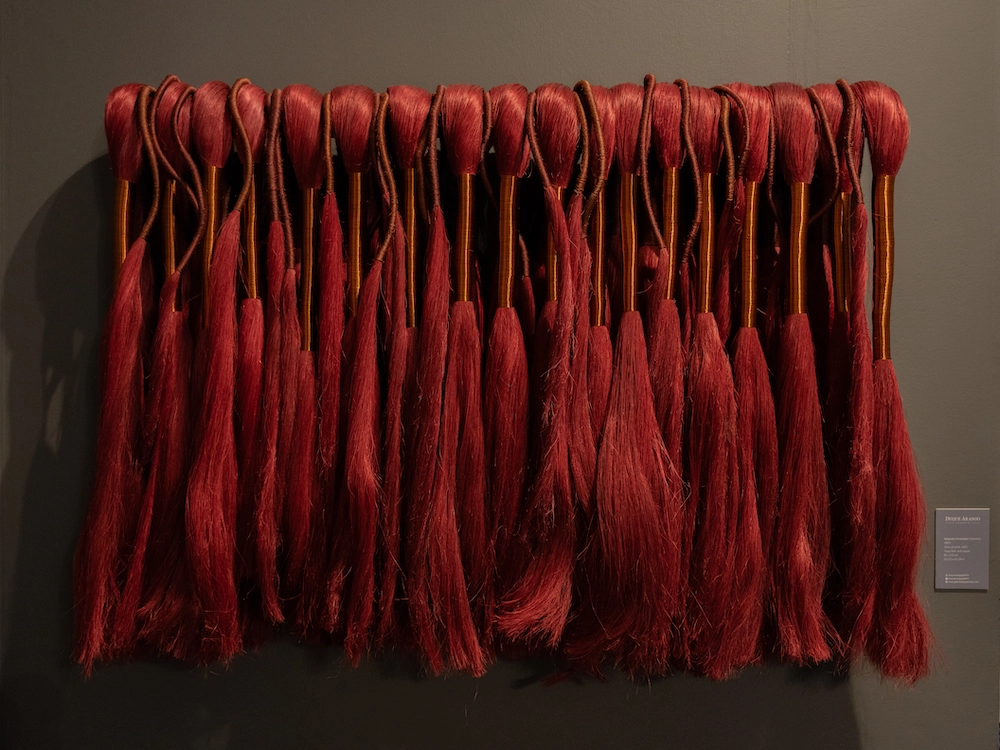
The work of Colombian artist Alejandra Aristizábal expands the conversation around contemporary sculpture through the use of organic materials and traditional craft techniques.
Working primarily with fique fiber, Aristizábal collaborates with artisan communities to transform natural fibers into sculptural forms that challenge the boundaries between craft, textile art, and contemporary installation.
Aristizábal’s work has been presented internationally, including at Art Miami, attracting attention from collectors interested in innovative sculptural practices emerging from Latin America.
Carlos Vega:
Chilean painter Carlos Vega Faúndez has established himself as one of the most technically accomplished artists within the field of contemporary figurative painting. After studying design in Valparaíso and fine arts in Chile, Vega continued his training in Spain under the guidance of painter Guillermo Muñoz Vera.
Carlos Vega’s paintings demonstrate exceptional technical control while simultaneously offering subtle critiques of contemporary visual culture. Everyday objects, museum catalogues, branded bags, and seemingly mundane scenes appear within his compositions, questioning how cultural value and artistic legitimacy are constructed.
Exhibition by hyperrealist artist Carlos Vega at Duque Arango Gallery.
Darío Ortiz:
Colombian painter Darío Ortiz is widely recognized for his mastery of classical painting techniques and his reinterpretation of historical imagery through contemporary figuration.
Often working in oil, Darío Ortiz painter compositions reference European art history while introducing subtle narrative shifts that connect past iconography with present-day social concerns. His works frequently explore themes such as memory, violence, and identity.
Ortiz has exhibited widely throughout Europe and Latin America, and his paintings appear in numerous private art collections, reinforcing his position among notable modern Latin American painters working today.

Sair García:
Born in Barrancabermeja, Colombia, Sair García has developed a body of work deeply connected to the social and political history of his country. His practice combines painting, installation, and sculpture to explore themes of conflict, displacement, and collective memory.
Within García’s work, the landscape becomes a powerful narrative device that operates as a witness to human experience, particularly the histories of migration and violence that have shaped Colombia.
This ability to transform the landscape into an emotional and political archive positions García among the most compelling contemporary Latin American painters addressing social history through visual language.
Andrés Moreno:
Colombian artist Andrés Moreno works at the intersection of painting, drawing, and graphic imagery, constructing symbolic visual narratives that draw from popular culture, architecture, and design.
His works often incorporate recognizable icons that are recontextualized within layered compositions, inviting viewers to reconsider the cultural meaning of everyday images. Through this approach, Moreno explores how visual symbols shape collective identity and memory.
As part of a new generation of Latin American artists to watch, Moreno’s work appeals to collectors interested in conceptual storytelling combined with strong visual accessibility.
Opening of Andrés Moreno’s exhibition at Duque Arango Contemporáneo, our second art gallery space.