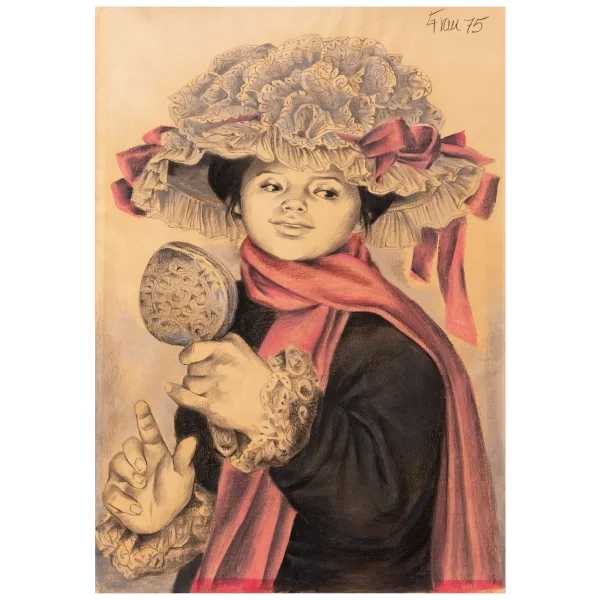
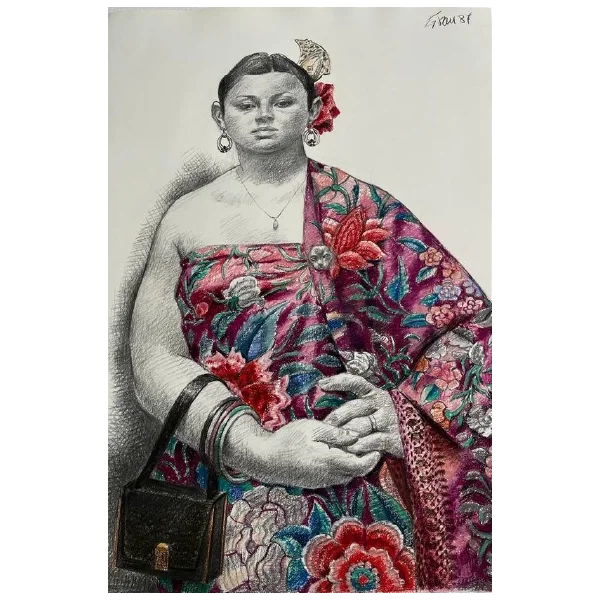
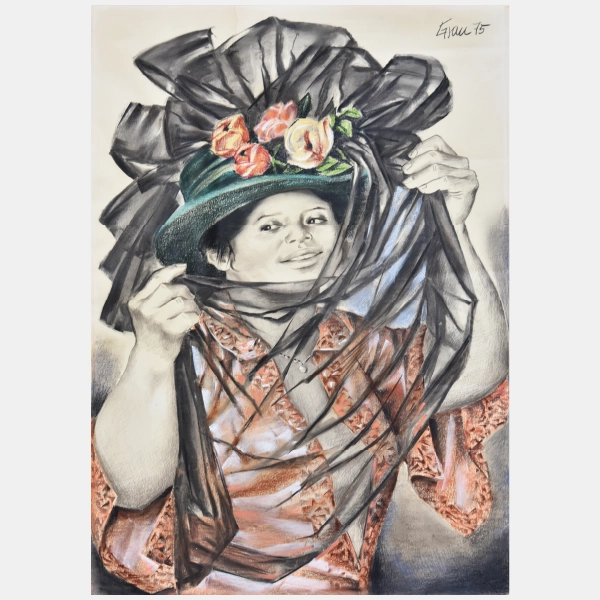
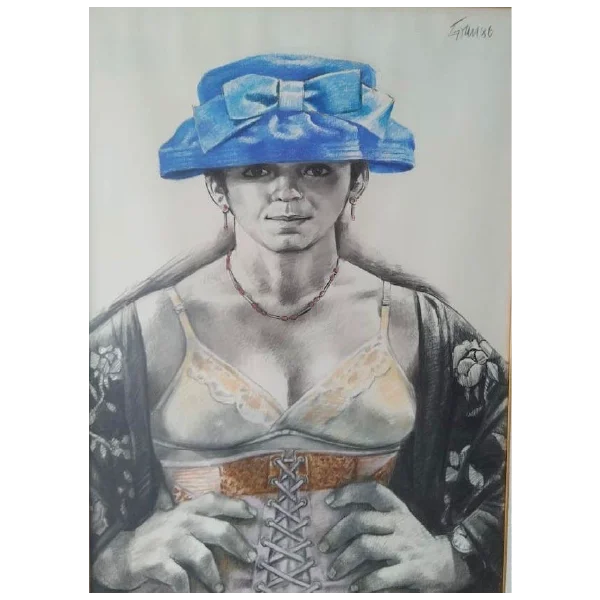
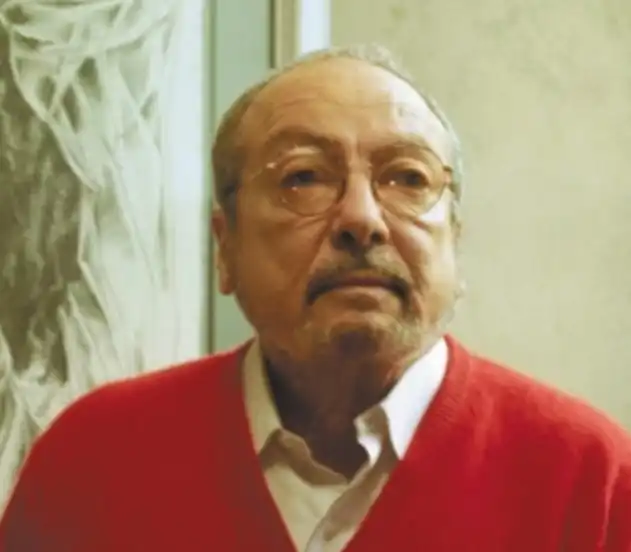
Enrique Grau was born on July 6, 1920. The son of a family from Cartagena de Indias, he was born in Panama and did his early studies in Bogotá. He obtained a government scholarship to continue his education at the Art Students’ League in New York, where he remained from 1940 to 1943, and then continued his studies in Italy, where he perfected his technique as a muralist, painter and draftsman, achieving great expertise in all facets. In the United States he studied with Tadeusz Kantor and was also a disciple of the German artist George Grosz.
Previously, as a self-taught artist, Grau has already made copies of the great masters (El Greco, Rembrandt, Jean-Antoine Watteau), portraits of movie stars and, especially, portraits of family members and the domestics in his home.
Based in Florence from 1955 to 1956, Grau concretizes the most characteristic of the third phase of his creative process: the recreation of reality based on cubism. From then until 1959, his work became basically geometric and, between 1958 and 1959, close to abstraction.
Grau was also a teacher at the School of Fine Arts of the National University and at the University of the Andes, and did scenography for plays, becoming, in 1954, Head of the Scenography Department of Televisora Nacional. . During these years he was awarded several prizes, including first place in painting at the X Salón de Artistas Colombianos with his work Elementos bajos un Eclipse (1957).
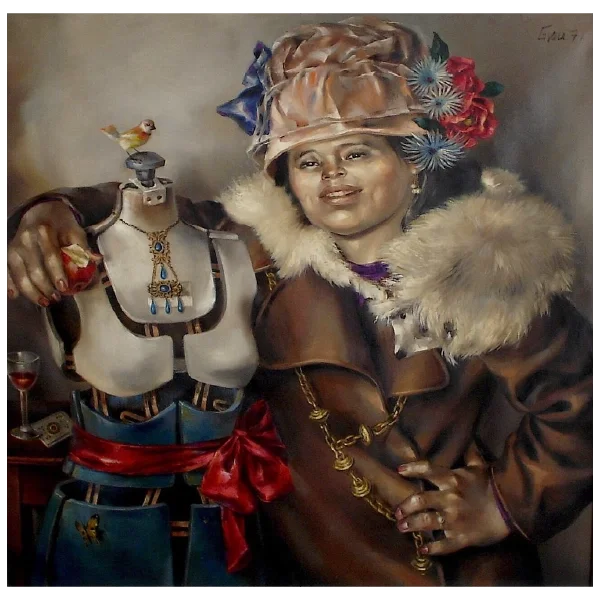
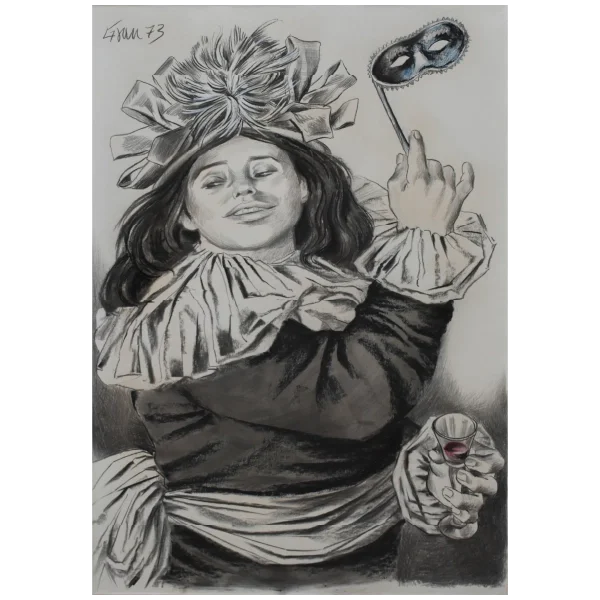
From 1959 onwards, his work becomes frankly realistic: he is interested in the human figure and its environment. His work then evolved towards a new academicism, making a recreation of reality; taking advantage of his passage through the geometric structures, he gave a great solidity to the forms of naturalistic tendency. Passionate for volume, for emphatic and concrete forms and for an extremely baroque decor in terms of furniture, ornaments and costumes that accompany his characters, his world is nostalgic and variegated.
His associations with white, black and indigenous figures brought him international fame, with art exhibitions at the Solomon R. Guggenheim Museum in New York and the Musée National d’Art Moderne in Paris. Grau donated 1,300 of his artworks (including some by other artists) to the city of Cartagena; these were used for a museum in his honor opened in late 2004.
Colombian painter and sculptor Enrique Grau died on March 10, 1999 in Bogota after a short illness.