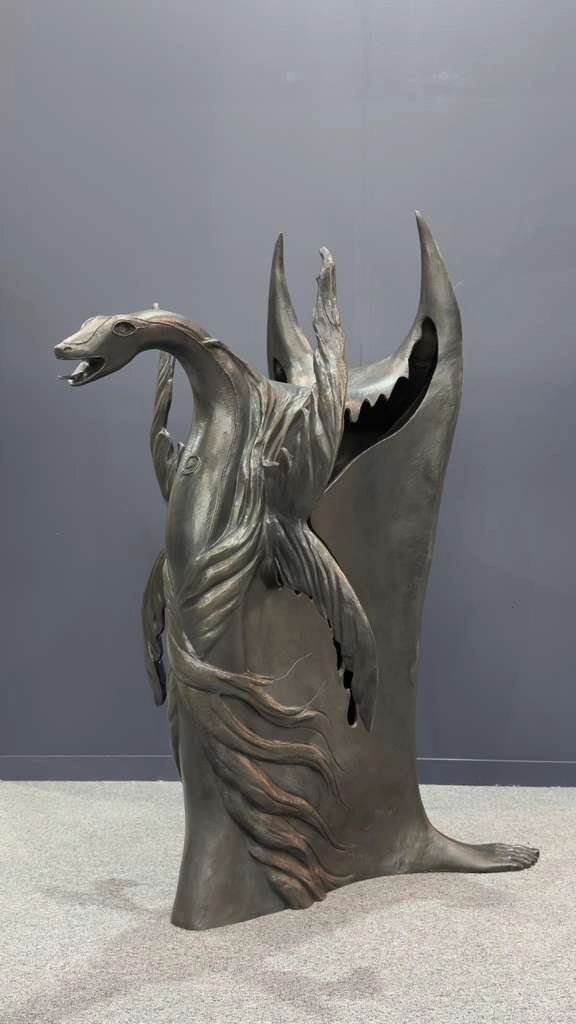
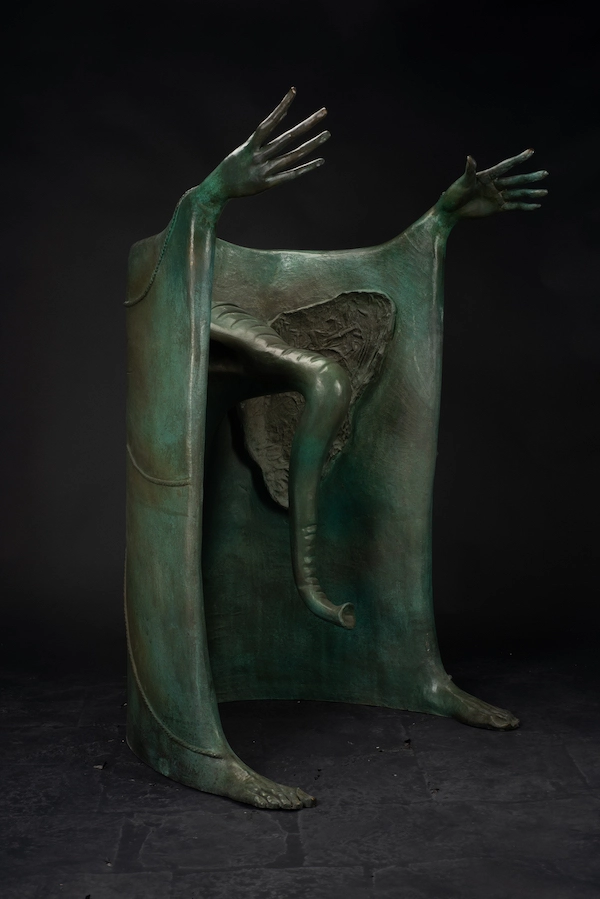
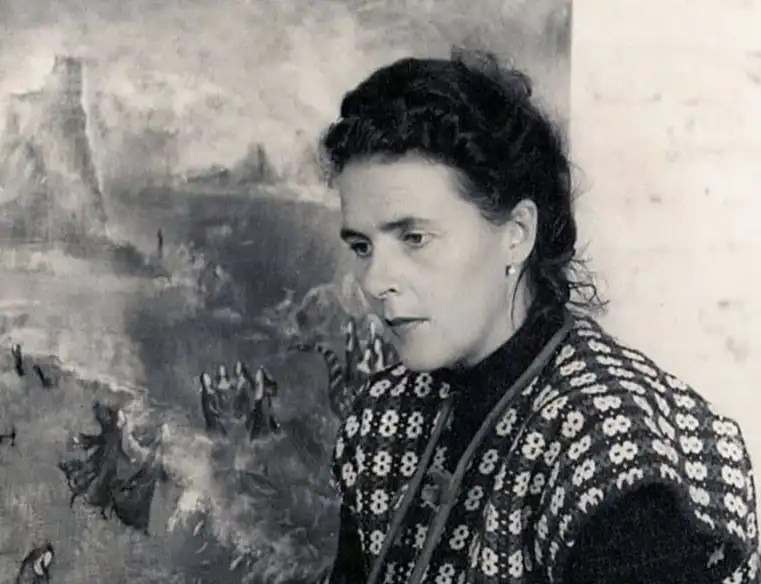
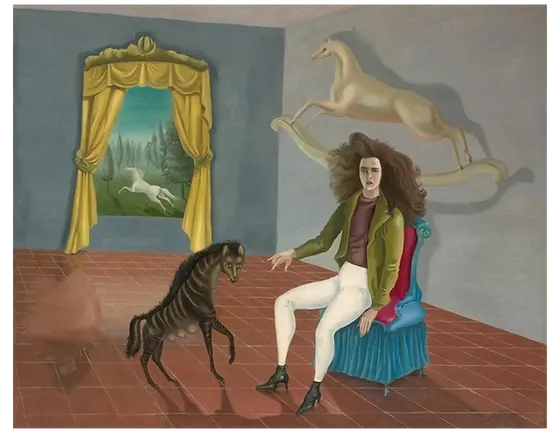
Leonora Carrington (Lancashire, England, 1917 – Mexico City, 2011) was a British-Mexican artist and writer and one of the leading figures of 20th-century Surrealism. Through painting, sculpture, and literature, she developed a distinctive visual universe populated by hybrid creatures, animals, female figures, and ritualistic scenes, combining references to mythology, alchemy, esotericism, and diverse spiritual traditions.
Carrington was born in England and grew up surrounded by stories drawn from Celtic mythology and Irish oral traditions, elements that would later recur throughout her work. She studied art in London, including at the academy of painter Amédée Ozenfant. During the 1930s, she became associated with the European Surrealist circle and developed a personal and artistic relationship with Max Ernst.
Following the outbreak of World War II and a period marked by her departure from France and Spain, Carrington arrived in Mexico in 1942. It was there that she would develop much of her artistic career and later become a Mexican citizen.
In Mexico, Leonora Carrington found new sources for her imagery in Mesoamerican cultures, folk art, and the country’s spiritual traditions. She also developed a close friendship with artist Remedios Varo, with whom she shared an interest in alchemy, magic, and esotericism.
Leonora Carrington’s artworks are characterized by enigmatic narratives in which humans, animals, and fantastic beings coexist in spaces where the boundaries between reality and transformation remain fluid. Horses, hybrid creatures, rituals, gardens, and imaginary architectures recur throughout compositions that explore identity, metamorphosis, nature, spirituality, and the role of women.
In addition to her visual practice, Carrington developed an important body of literary work and participated in movements connected to women’s rights in Mexico.
Her legacy occupies an essential place within Surrealism and modern art, and her works are held in major international collections, including those of the Museum of Modern Art (MoMA), the Metropolitan Museum of Art, and Tate.