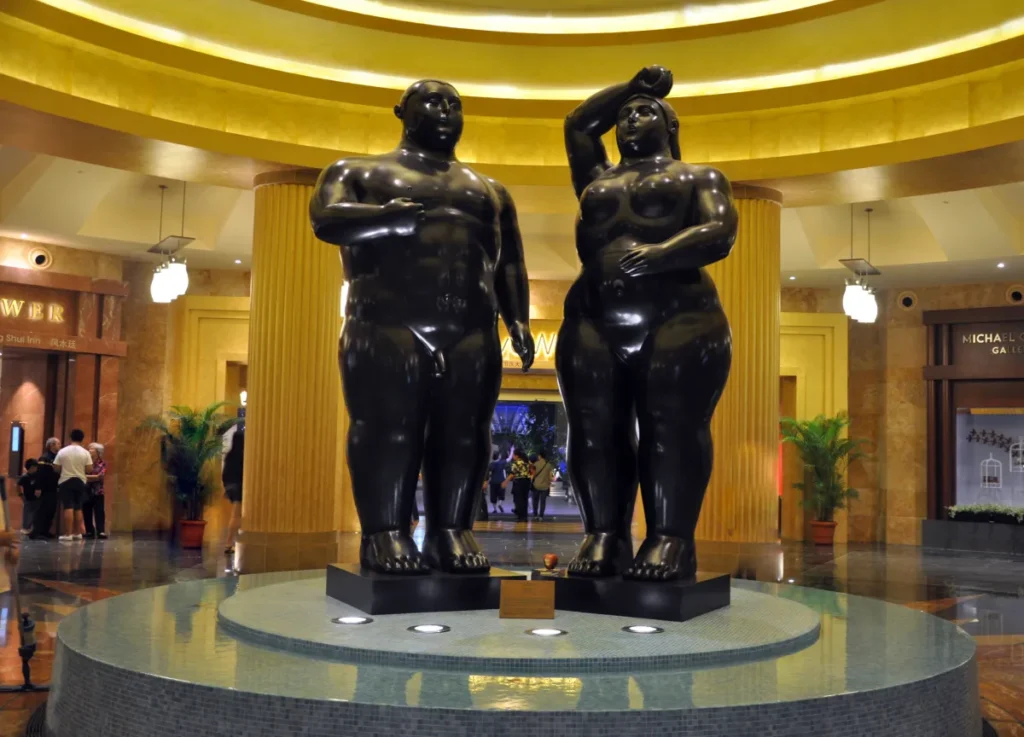
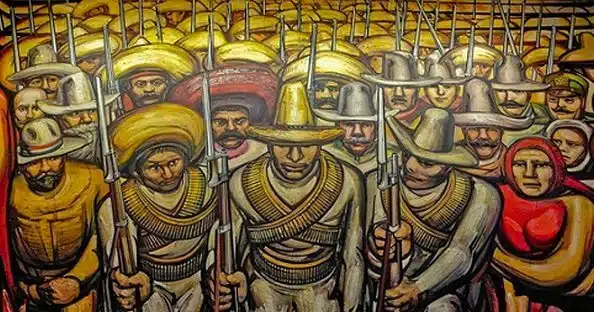
Latin American Art cannot be understood without acknowledging the profound impact of muralism and its history: emerging in the aftermath of the Mexican Revolution in the early twentieth century, muralism transformed art into a powerful public language that addressed social inequality, national identity, and collective memory. Unlike traditional academic painting, which often served elite audiences, Latin American muralism was conceived as a democratic medium: monumental, accessible, and deeply political.
The movement became one of the most influential Latin American art movements of the twentieth century, redefining the role of the artist as a public intellectual and positioning art as an instrument of education and transformation. Murals narrate the histories of workers, indigenous communities, and revolutionary struggles, turning architecture into a canvas for social consciousness.
Mexican Muralism and the Birth of Revolutionary Art
The origins of Mexican muralism are inseparable from the political and cultural transformations that followed the Mexican Revolution (1910–1920). After years of conflict, the newly established government sought to unify the country through education and cultural initiatives. Murals became central to this project.
Artists were commissioned to decorate public buildings with scenes that celebrated indigenous heritage, labor movements, and revolutionary ideals.
This period marked a turning point in modern Latin American art, as artists began to reject European academic traditions and develop visual languages rooted in local realities. The scale and visibility of muralism allowed it to reach audiences far beyond museums and galleries, embedding social justice in art into the daily lives of citizens.
The movement’s influence extended internationally, particularly in the United States, where muralists introduced new ideas about public art and social engagement. Today muralism is recognized as one of the defining chapters of 20th century Latin American art, shaping artistic production across continents.
The Great Latin American Muralists: Rivera, Orozco, and Siqueiros
Any discussion of Latin American muralists inevitably begins with three figures: Diego Rivera,José Clemente Orozco, and David Alfaro Siqueiros.
Diego Rivera:
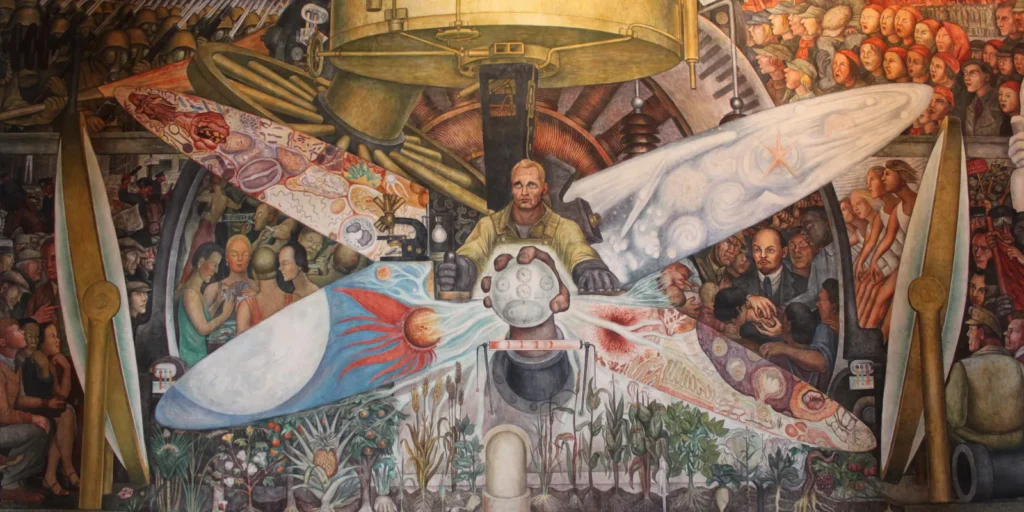
Diego Rivera became one of the most recognizable figures in Latin American art history, known for his monumental compositions depicting workers, farmers, and industrial progress. His murals frequently addressed themes of class struggle and economic inequality, positioning him as a central voice within revolutionary art.
Rivera’s work extended beyond Mexico, most notably in the United States, where he created murals that sparked controversy for their overt political content. His commitment to social commentary demonstrated how art as political expression could challenge dominant narratives and provoke public debate.
José Clemente Orozco:
This Mexican artist offered a more introspective perspective on revolution. Rather than glorifying political movements, his murals explored the human cost of conflict, emphasizing suffering, sacrifice, and moral complexity. José Clemente Orozco’s contributions expanded the emotional and philosophical depth of Latin American muralism, positioning the movement not only as propaganda but as a reflection on the ethical dilemmas of modern society.
David Alfaro Siqueiros:
David Alfaro Siqueiros was perhaps the most technically experimental of the three. He incorporated industrial materials, photographic techniques, and dynamic perspectives to create immersive visual experiences. His innovations influenced generations of artists and helped establish muralism as a key force in contemporary Latin American art, demonstrating that political commitment and technological experimentation could coexist within a single artistic vision.
Rufino Tamayo:
A Modern Vision Within Latin American Muralism
While Rivera, Orozco, and Siqueiros defined the ideological foundations of muralism, Rufino Tamayo introduced a radically different perspective—one that emphasized universality, color, and formal innovation over overt political messaging.
Tamayo occupies a unique position within Latin American art. Rather than aligning himself with revolutionary propaganda, he sought to reconcile tradition and modernity, blending indigenous cultural references with influences from European modernism, including Cubism and Surrealism. His approach marked a decisive shift in modern Latin American art, demonstrating that national identity could be expressed through aesthetic experimentation rather than ideological rhetoric.
One of Tamayo’s most significant contributions to Latin American muralism was his exploration of color as a structural element. His murals are characterized by luminous palettes, textured surfaces, and simplified forms that evoke emotional resonance rather than narrative detail. Through these innovations, he expanded the visual vocabulary of muralism and positioned Latin American art within global modernist discourse.
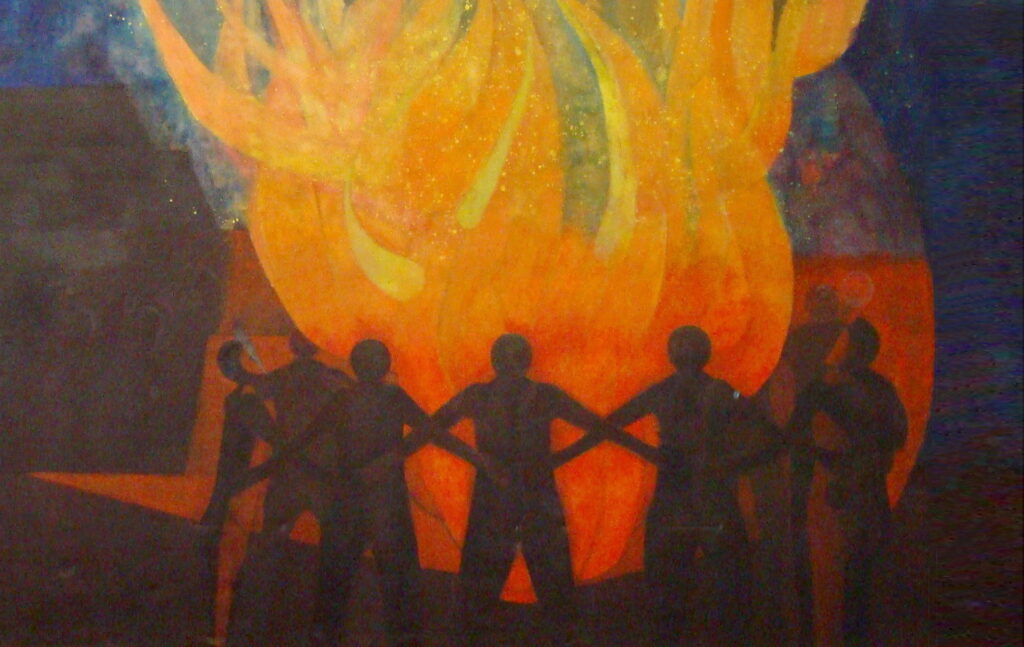
Importantly, Tamayo’s work also challenged the assumption that revolutionary art must always be explicitly political. Instead, he proposed that cultural identity, mythology, and human experience could serve as equally powerful subjects. This perspective allowed muralism to evolve beyond its original revolutionary context and adapt to new artistic and social realities.
Today, Tamayo is widely regarded as a bridge between early twentieth-century muralism and the emergence of contemporary Latin American art, influencing generations of artists who seek to balance local traditions with international modernism.
Muralism Beyond Mexico:
Although Mexico served as the birthplace of muralism, the movement quickly spread throughout Latin America, adapting to diverse political and cultural contexts. Each country developed its own interpretation of muralism, reflecting local histories and social struggles.
In Chile, muralism gained prominence during periods of political mobilization, often produced collectively by artist brigades rather than individual creators. These murals addressed themes such as workers’ rights, education, and civic responsibility.
In Brazil, artists used murals to confront issues of racial inequality, urban poverty, and indigenous identity. Public art became a platform for community engagement, reinforcing the role of social justice in art as a defining characteristic of the region’s cultural production.
Ecuador also embraced muralism as a tool for historical representation and national pride. Artists created large-scale works depicting indigenous heritage and social transformation, demonstrating how Latin American muralism could serve as both cultural preservation and political commentary.
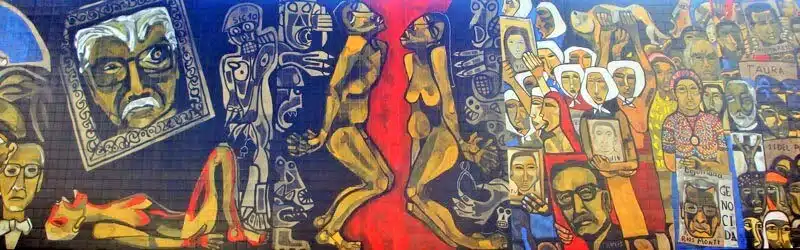
In Colombia, muralism initially faced resistance from political and academic institutions, which viewed it as radical or subversive. Over time, however, public perception shifted, and murals became widely recognized as valuable expressions of cultural identity and historical memory.
The influence of muralism remains deeply embedded in contemporary Latin American art. Today’s artists continue to use public space as a platform for dialogue, addressing issues such as migration, environmental sustainability, and social inequality.
Museums, collectors, and cultural institutions around the world increasingly recognize muralism as a cornerstone of Latin American art history, not only for its aesthetic achievements but also for its social impact. The movement demonstrated that art could function as a catalyst for collective reflection and civic engagement.
Perhaps most importantly, muralism redefined the relationship between art and society. By transforming walls into narratives and cities into open-air galleries, Latin American muralists established a model for artistic practice that remains relevant in the twenty-first century.