Gustavo Velez in Pietrasanta: the exhibition that marks 30 years in the world capital of sculpture
In the summer of 2026, Gustavo Velez occupies Pietrasanta. Monumental sculptures in marble, bronze and polished steel are installed across the historic squares, the seafront pier and the convent complex of the Tuscan city, in one of the most ambitious public exhibitions ever organised around a contemporary Latin American sculptor. Le Dimensioni dell’Equilibrio is the public consolidation of three decades of work between Medellín, Carrara and the workshops of Pietrasanta.
Le Dimensioni dell’Equilibrio: the diffuse exhibition across Pietrasanta
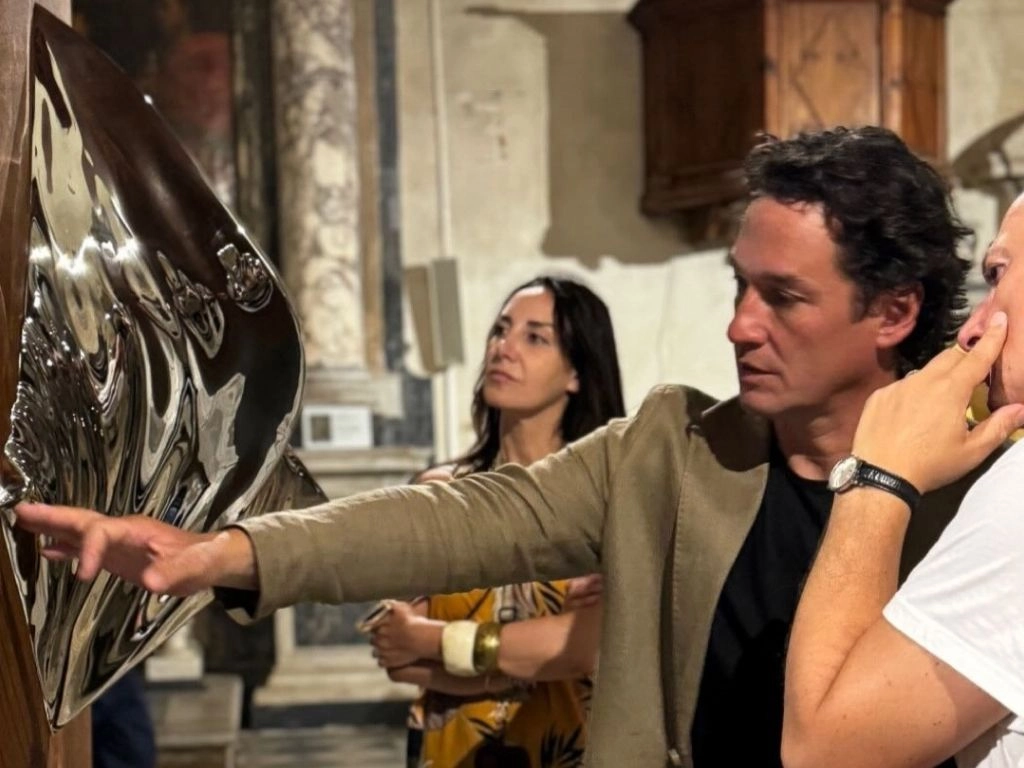
From 11 June to 20 September 2026, Pietrasanta hosts Le Dimensioni dell’Equilibrio, an exhibition by Gustavo Velez celebrating his thirty years of artistic activity in Italy. The project is curated by Francesca Sborgi with the contribution of art historian Eike Schmidt, former director of the Gallerie degli Uffizi in Florence. The institutional weight of the curatorial team is itself a signal: Pietrasanta does not concede its public squares to just any sculptor.
The show unfolds across six landmark venues:
- Piazza del Duomo — the historic centre and the heart of the route.
- Sant’Agostino Complex — the church and its cloister provide an architectural counterpoint.
- Piazza Carducci.
- Piazza Statuto.
- Piazza XXIV Maggio.
- Pontile of Marina di Pietrasanta — the pier where sculptures meet the Tyrrhenian Sea, with the Apuan Alps as backdrop.
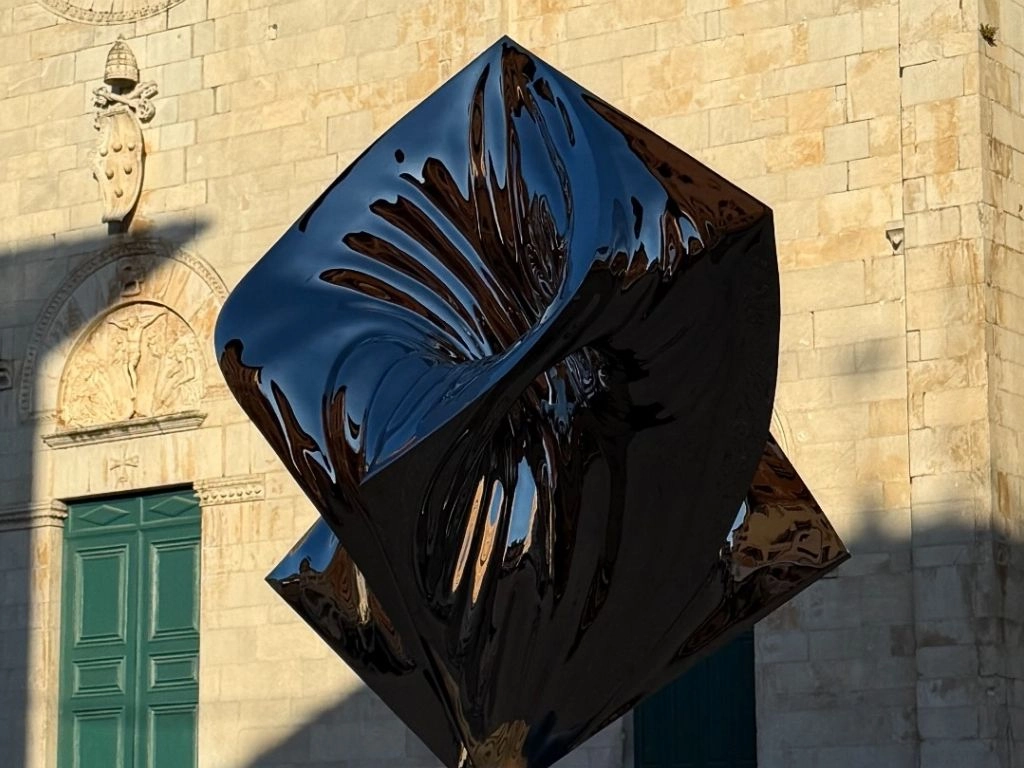
The curatorial text by Francesca Sborgi frames the show around a single tension: weight against lightness, the verticality of the Apuan Alps against the horizontality of the Tyrrhenian. Geometry — the square and the circle as starting points — operate as a principle for organising living matter, traversed by air, water and light.
Who is Gustavo Velez, the sculptor behind the show
Gustavo Velez was born in Medellín, Colombia, in 1975. His early decision was to study in Italy: he entered the Lorenzo de Medici Academy in Florence and then completed his training in the workshops of Pietrasanta, the international destination for any sculptor working seriously in marble and bronze. In 1996 he moved to Pietrasanta. Most of his production has been concentrated there ever since.
In parallel, Velez visits the marble quarries of Carrara, in the Apuan Alps, where he personally selects the blocks intended for his monumental work. In Colombia he keeps a separate studio dedicated to steel. This double-studio architecture has been decisive in shaping a sculptural language that occupies a precise place within contemporary sculpture today.
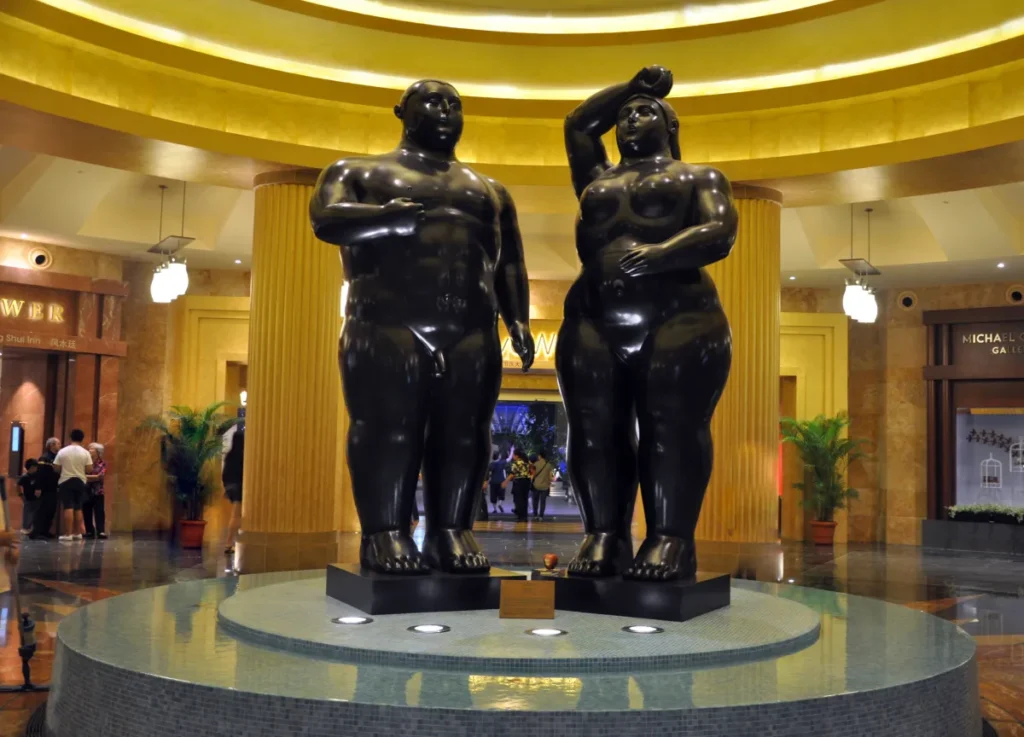
Velez’s relationship with Pietrasanta took a public turn in 2013, when he became the youngest sculptor ever to occupy Piazza del Duomo and the Chiesa di Sant’Agostino, with bronze, steel and marble works reaching up to seven metres in height and eight tonnes in weight. Eleven years later, in November 2024, he received the International Prize Pietrasanta e la Versilia Nel Mondo, the same distinction the city had awarded to Fernando Botero in 1991. That recognition places Velez among the very few Colombian sculptors to have achieved this level of institutional presence in Italy.
Pietrasanta: world capital of sculpture and city of sculptors
Pietrasanta, in northern Tuscany, has been the city of sculptors for centuries. Its advantage is geological before it is cultural: the town sits a few kilometres from the white marble quarries of Carrara, in the Apuan Alps — the same stone with which Michelangelo carved the Vatican Pietà and the David in Florence. That proximity has, since the Renaissance, sustained an ecosystem of marble workshops and bronze foundries that remains active today.
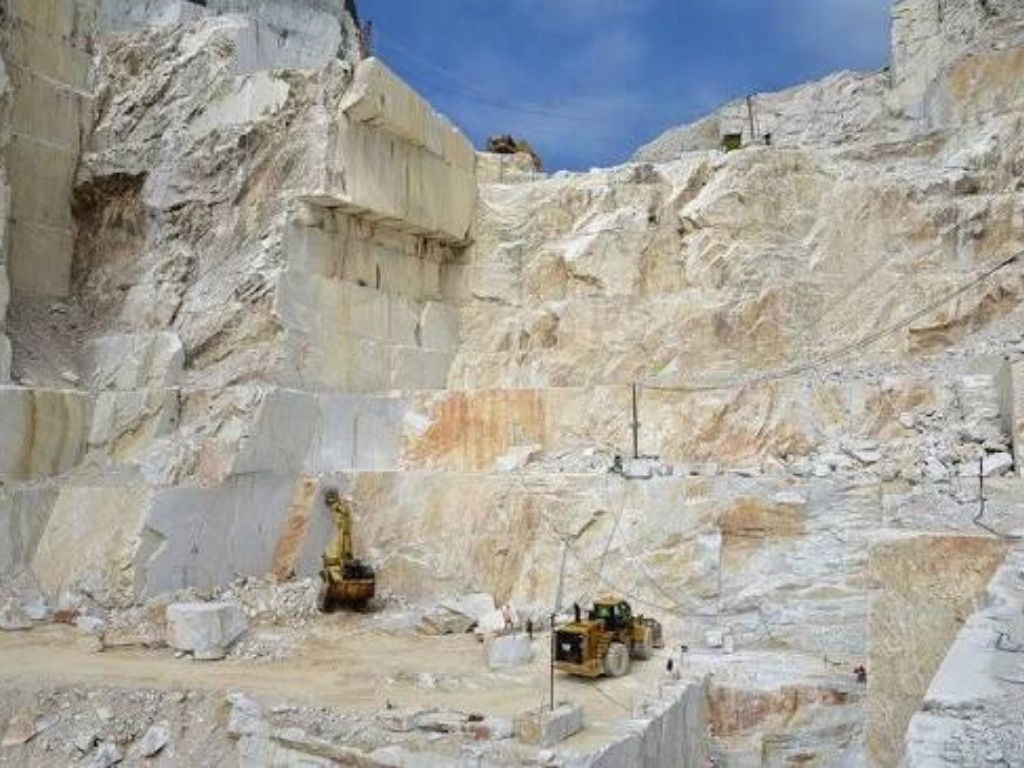
The workshops here have hosted artists such as Henry Moore, Joan Miró, Jean Arp, Igor Mitoraj, Pietro Cascella, Fernando Botero, and Gustavo Velez himself. Together with the city’s Academy and its network of artisanal laboratories, this concentration of crafts has no real equivalent elsewhere in Europe.
Working in Pietrasanta gives a contemporary sculptor access to a complete production chain: block extraction in Carrara, transport to the studio, modelling, hand and mechanical carving, bronze casting, patinas, finishing and crating for international shipment. That infrastructure is the reason why artists in Pietrasanta are not an exception but a structural community.
The work of Gustavo Velez: marble sculpture, bronze and steel at monumental scale
Gustavo Velez’s sculpture investigates the relationship between geometry, balance and movement. Where classical practice rested the figure on a tripod or on the weight of the mass, Velez seeks a single, almost impossible axis on which the piece appears to remain suspended. Producing a sense of lightness in a block of marble that weighs several tonnes is the technical and poetic core of his work.
His vocabulary belongs without ambiguity to abstract sculpture, but it is not an orthodox abstraction. The pure geometries — circle, square, arc, spiral — are crossed by internal tensions that put the initial configuration into question. The form opens, splits, interrupts itself. This investigation is documented in his catalogues, including Three-dimensional Poetics (2016) and Balancing Exercises at the Edge of the Void (2021).
Velez’s international career is wide-ranging. He has exhibited in galleries and museums in Tokyo, Utsunomiya, Iwaki and Yokohama, at the Imperial City Museum in Beijing, and at fairs including Art Shanghai (China), KIAF (Korea) and Art Stage (Singapore). In 2009 a monumental sculpture of his was installed in the Art Valley sculpture park in Seoul. Within the broader landscape of contemporary sculpture from Colombia, his public installations in Medellín, make his work part of everyday urban life as much as of museum and fair contexts.
Carrara, Forte dei Marmi and the Versilia sculpture corridor
Pietrasanta belongs to a cultural corridor that includes Carrara — and its quarries — to the north, and Forte dei Marmi to the south. This is where sculptors select their material, work on it and present it to the public. Understanding this territory helps to explain why Velez’s 2026 exhibition is not an isolated event but the visible outcome of a decision made in 1996: to relocate to the home of marble sculpture and to make local craftsmanship an active component of his practice.
How to see the work of Gustavo Velez
Le Dimensioni dell’Equilibrio remains open to the public in Pietrasanta until 20 September 2026. For collectors who cannot travel, Duque Arango Gallery presents pieces by Gustavo Velez (represented artist) continuously, both in its exhibition programme